🏛️ The House on Brunswick Street
🍁 The Rob Brown Realty JournalWednesday | Fredericton History
How many times have you travelled along Brunswick Street without giving much thought to the buildings passing by your window?
Perhaps you were heading downtown for lunch, making your way toward Westmorland Street or visiting Avalon SalonSpa.
But tucked along the south side of Brunswick Street, between Westmorland and York, stands a building with a remarkable story.
Its address is 318 Brunswick Street.
Its historic name is The Temple House.
And behind its windows lies a history that connects Fredericton to the early railway industry, Canadian Parliament, transatlantic communications, medicine and generations of local families.
Not bad for a building many of us pass without a second glance.
Today, we're taking a closer look at one of Fredericton's historic residences and discovering why old houses are sometimes among our most interesting history books.
To put that into perspective, William IV was still on the British throne. Queen Victoria would not begin her reign until 1837, and Canadian Confederation was still more than three decades away.
Fredericton itself would not officially become an incorporated city until 1848.
If the estimated construction date is accurate, this house has been part of Fredericton's landscape for nearly two centuries.
Imagine the changes it has witnessed.
Horse-drawn transportation giving way to automobiles. The arrival of railway connections, electricity and modern communications. A small colonial capital gradually becoming the Fredericton we recognize today.
The identity of the original builder remains uncertain, but the property's association with the early development of Brunswick Street's western end makes it historically significant in its own right.
And in 1863, the house acquired an owner whose name would become closely connected with Fredericton's development.
His life would take him in several directions, from farming and the lumber industry to business, transportation and public service.
In 1842, he married Susannah Howe of Southampton, New Brunswick.
Twenty-one years later, in 1863, Temple purchased the Brunswick Street property.
The timing is particularly interesting.
The following year, he became High Sheriff of York County, a position he would hold until 1883.
These were transformative years for New Brunswick. Confederation arrived in 1867, railway development was changing the movement of people and goods, and Fredericton was establishing its place within a new Canadian federation.
Temple would eventually become one of the prominent figures involved in those changes.
His career included:
⚖️ High Sheriff of York County from 1864 to 1883.
🚂 Leadership of the Fredericton Railway Company, beginning in 1868.
🏦 A directorship with the People's Bank of Fredericton.
🇨🇦 Representation of York in the Canadian House of Commons from 1884 to 1896.
🏛️ Service in the Senate from 1896 until his death in 1899.
His involvement in business and transportation extended well beyond his political career.
And one particular connection leads us to a Fredericton landmark that many of us still enjoy today.
But long before the bridge became a favourite destination for walkers, runners and cyclists, crossing the Saint John River by railway was an important economic ambition.
Thomas Temple was among the businessmen involved in establishing the Fredericton and St. Mary's Railway Bridge Company in 1885. He served as its managing director, working alongside other prominent local figures, including Alexander "Boss" Gibson.
The original railway bridge opened in 1888.
For Fredericton, this represented something much bigger than a convenient river crossing. Railway connections provided opportunities for businesses, manufacturers and residents to participate in an increasingly interconnected economy.
The original structure was destroyed during the devastating spring flooding of 1936. Its replacement opened in 1938 and is the bridge we recognize today as the Bill Thorpe Walking Bridge.
So the next time you're enjoying a walk across the river, consider the connection.
One of the men involved in developing the original railway crossing had purchased a house on Brunswick Street decades earlier.
The bridge and the house belong to different chapters of Fredericton's history, but Thomas Temple provides a fascinating link between them.
Sometimes the history of an entire city can be traced through a single address.
Near the Beaverbrook Art Gallery, at the Queen Street and St. John Street end of downtown, stands an unusual granite monument topped by a reclining lion.
This is the Thomas Temple Fountain.
Presented to Fredericton in 1899, it was designed to provide drinking water for people and animals.
Remember, horses were still a major part of everyday transportation. Providing access to drinking water was a practical public service, not simply an ornamental addition to a streetscape.
The fountain accommodated horses, dogs and human visitors.
You could almost think of it as a nineteenth-century public drinking fountain with several different customer groups!
Temple chose New Brunswick granite for the monument, which was manufactured in St. George using stone quarried from Spoon Island in the Saint John River.
In August 1899, Temple participated in its unveiling by officially turning on the water. It would be his final public act.
He died later that month at the age of 80.
Although the monument no longer operates as a drinking fountain, it remains a reminder of an era when Fredericton's transportation needs looked very different.
And now, when you see that lion on Queen Street, you'll know another connection to the house at 318 Brunswick.
The Temple House is no exception.
At another point in its history, the property became associated with George Hatt, a local merchant whose grocery enterprise operated as George Hatt & Sons.
His association with the residence became so established that Fredericton residents came to identify it by his name rather than Temple's.
It's a wonderful little reminder of how neighbourhoods once worked.
Before online property searches, civic addressing systems became as familiar as they are today, and digital maps could guide us directly to a front door, people frequently identified houses by the families associated with them.
The doctor's house.
The merchant's house.
The old family home down the street.
A property was more than its address.
It was part of the community's collective memory.
George Hatt's chapter also offers a glimpse into Fredericton's commercial history, when local merchants and family businesses played an essential role in supplying households and sustaining the downtown economy.
By the closing years of the nineteenth century, however, the house was about to acquire another fascinating chapter.
This one would take us considerably farther than Brunswick Street.
McNally had received his early schooling in Fredericton before earning his medical qualification at McGill University.
He began practising medicine locally, but his professional journey eventually took him to sea.
For three years, he served as the physician aboard the CS Mackay-Bennett, a vessel operated by the Commercial Cable Company.
Its work involved installing and maintaining the underwater cables that carried communications across the Atlantic Ocean.
Think about that for a moment.
Today, we send a message across the world in seconds without giving much thought to the infrastructure making it possible.
In the nineteenth century, specialized ships and their crews were responsible for maintaining the physical cables connecting distant countries.
McNally was part of that world.
Following his time at sea, he continued his medical experience in hospitals in London and Edinburgh before returning to New Brunswick and establishing a practice in Fredericton.
His remarkable career brought international experience back to a local community.
And when he acquired the Brunswick Street house, he undertook substantial improvements to bring the residence up to date.
It's interesting to consider that even more than a century ago, Fredericton homeowners were doing something familiar to many of us today.
Purchasing an older property.
Recognizing its potential.
Adapting it to their needs.
And making improvements for a new generation.
Historic houses weren't always historic.
At one time, somebody was simply trying to make them more comfortable and practical places to live.
Sometimes architectural character comes from balance, proportion and understated detail.
The Temple House offers a good example.
Its two-level timber-framed structure reflects a longstanding residential building tradition. The roof includes distinctive gabled forms, while generous rectangular windows contribute to the building's proportions.
Among its most interesting details are its Classical Revival porch features.
Look particularly at the enclosed entrance and the triangular architectural feature above it, known as a pediment.
It's a design element inspired by classical architecture and one that brings a sense of formality to an otherwise relatively understated residence.
That entrance helps give the property its recognizable identity.
When you pass the building, take a moment to appreciate its overall form rather than simply looking at individual decorative features.
Notice the rhythm of the windows.
The relationship between the porch and roof.
The proportions of the building.
Its presence along the street.
These are the architectural qualities that can make an older neighbourhood feel distinctive, even when we can't immediately explain why.
Of course, a building approaching two centuries in age is unlikely to have remained completely unchanged.
McNally's renovations are documented, but the available heritage description doesn't establish exactly when every surviving architectural feature was introduced.
What we're seeing today is the product of a building's evolution, not necessarily a perfectly preserved snapshot of 1835.
And that evolution is part of its story.
The VanWart family's association with the house would extend for more than fifty years.
Consider the changes Fredericton experienced during that period.
The economic difficulties of the Great Depression.
The Second World War.
The postwar housing boom.
The growing popularity of private automobiles.
The expansion of residential neighbourhoods beyond the traditional downtown.
While Fredericton was becoming a different kind of city, this Brunswick Street residence remained part of its established landscape.
Long periods of family ownership are an interesting part of residential history.
While political careers and major business achievements often receive considerable attention, the everyday stewardship of a property matters, too.
Families maintain buildings, adapt them, repair them and carry them through changing times.
Without generations of people continuing to find value in older properties, many of our historic streetscapes simply wouldn't have survived.
And that's a contribution worth recognizing.
Avalon is a locally owned business with three Fredericton locations, including Main Street on the north side and Trinity Avenue uptown.
Its Brunswick Street location represents another chapter in the life of this historic property.
And I think there's something particularly interesting about that transition.
A building once associated with a railway businessman and senator, a grocery merchant, a physician and generations of family life now welcomes residents for entirely different reasons.
The purpose of the property has changed.
Its role within Fredericton continues.
There's a term for this approach in heritage conservation: adaptive reuse.
Instead of abandoning or demolishing a building when its original purpose changes, adaptive reuse gives it a new function.
A former residence might become a professional office.
An industrial building might become apartments.
An old commercial property might become a restaurant.
Or, as we've seen here, a historic home can become the setting for a modern local business.
When undertaken thoughtfully, adaptive reuse can help retain the architectural identity of a neighbourhood while allowing it to respond to changing economic and community needs.
It also raises a worthwhile question.
Is a historic building better protected by keeping it exactly as it was—or by finding a new purpose that allows it to remain relevant?
I suspect the answer depends on the building.
But the Temple House provides an interesting example of how an old residence can continue contributing to contemporary downtown life.
The street would still exist.
The intersections would still be there.
You could still get from one end to the other.
But would it feel like the same Fredericton?
Probably not.
That's because architecture contributes something beyond the practical function of providing shelter or commercial space.
It gives a community a visual identity.
The variety of rooflines, setbacks, porches, windows and building materials tells us that Fredericton wasn't constructed all at once.
It developed gradually, as different generations responded to their own needs, opportunities, challenges and architectural tastes.
That's particularly important in established downtown neighbourhoods.
You can walk past a building with roots in the early nineteenth century, a later Victorian residence and a more contemporary development, all within a relatively short distance.
Each represents a different moment in the city's development.
Together, they tell a story.
But as Fredericton continues to grow, preserving that character becomes a more complicated conversation.
Older buildings require investment. Modern accessibility standards, energy efficiency, fire safety and changing commercial needs can present practical challenges.
Not every restoration is simple, and not every building can be preserved in exactly its original form.
The question is how we balance those realities with the architectural and historical qualities that make Fredericton distinctive.
Because once a historic building disappears, constructing something that looks old isn't quite the same as preserving the real thing.
Some buyers are drawn to contemporary construction, modern systems and low-maintenance living.
Others fall in love with older homes because of their individuality, distinctive architectural features and connection to an established neighbourhood.
Neither preference is wrong.
But purchasing a historic property involves considerations that go beyond appearance.
Buyers should investigate the condition of the structure, heating and electrical systems, insulation, previous renovations and ongoing maintenance requirements.
They should also establish whether any heritage designation or preservation controls apply to the particular property and what approvals may be needed for future alterations.
A heritage inventory listing and legally enforceable restrictions aren't necessarily the same thing.
It's important to understand the difference before making plans.
Our recent Journal article, The Winter Walkthrough, explored some of the practical considerations that snow and cold weather reveal about residential properties.
Those considerations become especially interesting when evaluating houses that have been standing for a century or more.
But there's also something enormously appealing about owning a building that existed long before you arrived and may continue standing long after you've moved on.
You're not simply purchasing a property.
In a small but meaningful way, you're becoming part of its story.
Think about Thomas Temple and Fredericton's railway ambitions.
Think about George Hatt and the city's family-run commercial enterprises.
Think about Dr. McNally, travelling the Atlantic aboard a cable ship before returning to practise medicine in New Brunswick.
Think about the VanWart family's decades of association with the property.
And consider the local business that occupies the building today.
Nearly two centuries of possible history, all connected to one address.
What I love about stories like this is that they change the way we experience familiar places.
A house becomes something more interesting than an old building.
A railway bridge becomes more than a recreational trail.
A stone fountain becomes more than a decorative monument.
Suddenly, the city feels a little more connected.
And perhaps we become a little more curious about what else we've been walking past.
If you're drawn to Fredericton's historic neighbourhoods and would love to explore what living in one of them might look like, I'd be happy to help you discover the properties, architecture and stories that make each area unique.
But first, I'd love to hear from you.
Did you know the history behind 318 Brunswick Street?
Have you visited Avalon in this historic building? Do you remember an earlier chapter of the property's history? Perhaps your family has photographs or memories connected to Brunswick Street or the VanWart family.
And is there another historic Fredericton home you've always wondered about?
Share its address or story with us. It might just become the subject of our next Historic Home Spotlight.
Because Fredericton's history isn't confined to museums, monuments and textbooks.
How many times have you travelled along Brunswick Street without giving much thought to the buildings passing by your window?
Perhaps you were heading downtown for lunch, making your way toward Westmorland Street or visiting Avalon SalonSpa.
But tucked along the south side of Brunswick Street, between Westmorland and York, stands a building with a remarkable story.
Its address is 318 Brunswick Street.
Its historic name is The Temple House.
And behind its windows lies a history that connects Fredericton to the early railway industry, Canadian Parliament, transatlantic communications, medicine and generations of local families.
Not bad for a building many of us pass without a second glance.
Today, we're taking a closer look at one of Fredericton's historic residences and discovering why old houses are sometimes among our most interesting history books.
📜 A House Older Than Canada
Fredericton's Local Historic Places Register suggests that the Temple House may have been constructed as early as 1835.To put that into perspective, William IV was still on the British throne. Queen Victoria would not begin her reign until 1837, and Canadian Confederation was still more than three decades away.
Fredericton itself would not officially become an incorporated city until 1848.
If the estimated construction date is accurate, this house has been part of Fredericton's landscape for nearly two centuries.
Imagine the changes it has witnessed.
Horse-drawn transportation giving way to automobiles. The arrival of railway connections, electricity and modern communications. A small colonial capital gradually becoming the Fredericton we recognize today.
The identity of the original builder remains uncertain, but the property's association with the early development of Brunswick Street's western end makes it historically significant in its own right.
And in 1863, the house acquired an owner whose name would become closely connected with Fredericton's development.
👤 Enter Thomas Temple
Thomas Temple was born in Bampton, Oxfordshire, England, in 1818 and emigrated to New Brunswick in 1832 as a young teenager.His life would take him in several directions, from farming and the lumber industry to business, transportation and public service.
In 1842, he married Susannah Howe of Southampton, New Brunswick.
Twenty-one years later, in 1863, Temple purchased the Brunswick Street property.
The timing is particularly interesting.
The following year, he became High Sheriff of York County, a position he would hold until 1883.
These were transformative years for New Brunswick. Confederation arrived in 1867, railway development was changing the movement of people and goods, and Fredericton was establishing its place within a new Canadian federation.
Temple would eventually become one of the prominent figures involved in those changes.
His career included:
⚖️ High Sheriff of York County from 1864 to 1883.
🚂 Leadership of the Fredericton Railway Company, beginning in 1868.
🏦 A directorship with the People's Bank of Fredericton.
🇨🇦 Representation of York in the Canadian House of Commons from 1884 to 1896.
🏛️ Service in the Senate from 1896 until his death in 1899.
His involvement in business and transportation extended well beyond his political career.
And one particular connection leads us to a Fredericton landmark that many of us still enjoy today.
🚂 From Brunswick Street to the Railway Bridge
If you've ever walked across the Bill Thorpe Walking Bridge, you've experienced a piece of Fredericton's transportation history.But long before the bridge became a favourite destination for walkers, runners and cyclists, crossing the Saint John River by railway was an important economic ambition.
Thomas Temple was among the businessmen involved in establishing the Fredericton and St. Mary's Railway Bridge Company in 1885. He served as its managing director, working alongside other prominent local figures, including Alexander "Boss" Gibson.
The original railway bridge opened in 1888.
For Fredericton, this represented something much bigger than a convenient river crossing. Railway connections provided opportunities for businesses, manufacturers and residents to participate in an increasingly interconnected economy.
The original structure was destroyed during the devastating spring flooding of 1936. Its replacement opened in 1938 and is the bridge we recognize today as the Bill Thorpe Walking Bridge.
So the next time you're enjoying a walk across the river, consider the connection.
One of the men involved in developing the original railway crossing had purchased a house on Brunswick Street decades earlier.
The bridge and the house belong to different chapters of Fredericton's history, but Thomas Temple provides a fascinating link between them.
Sometimes the history of an entire city can be traced through a single address.
🦁 Have You Noticed the Lion on Queen Street?
There's another piece of Thomas Temple's legacy that you may have walked past without realizing its significance.Near the Beaverbrook Art Gallery, at the Queen Street and St. John Street end of downtown, stands an unusual granite monument topped by a reclining lion.
This is the Thomas Temple Fountain.
Presented to Fredericton in 1899, it was designed to provide drinking water for people and animals.
Remember, horses were still a major part of everyday transportation. Providing access to drinking water was a practical public service, not simply an ornamental addition to a streetscape.
The fountain accommodated horses, dogs and human visitors.
You could almost think of it as a nineteenth-century public drinking fountain with several different customer groups!
Temple chose New Brunswick granite for the monument, which was manufactured in St. George using stone quarried from Spoon Island in the Saint John River.
In August 1899, Temple participated in its unveiling by officially turning on the water. It would be his final public act.
He died later that month at the age of 80.
Although the monument no longer operates as a drinking fountain, it remains a reminder of an era when Fredericton's transportation needs looked very different.
And now, when you see that lion on Queen Street, you'll know another connection to the house at 318 Brunswick.
🛒 The George Hatt Chapter
One of the things I particularly enjoy about researching historic homes is discovering that their stories rarely belong to just one person.The Temple House is no exception.
At another point in its history, the property became associated with George Hatt, a local merchant whose grocery enterprise operated as George Hatt & Sons.
His association with the residence became so established that Fredericton residents came to identify it by his name rather than Temple's.
It's a wonderful little reminder of how neighbourhoods once worked.
Before online property searches, civic addressing systems became as familiar as they are today, and digital maps could guide us directly to a front door, people frequently identified houses by the families associated with them.
The doctor's house.
The merchant's house.
The old family home down the street.
A property was more than its address.
It was part of the community's collective memory.
George Hatt's chapter also offers a glimpse into Fredericton's commercial history, when local merchants and family businesses played an essential role in supplying households and sustaining the downtown economy.
By the closing years of the nineteenth century, however, the house was about to acquire another fascinating chapter.
This one would take us considerably farther than Brunswick Street.
⚓ The Doctor Who Crossed the Atlantic
In the late 1890s, physician Harry Hooper McNally acquired the property.McNally had received his early schooling in Fredericton before earning his medical qualification at McGill University.
He began practising medicine locally, but his professional journey eventually took him to sea.
For three years, he served as the physician aboard the CS Mackay-Bennett, a vessel operated by the Commercial Cable Company.
Its work involved installing and maintaining the underwater cables that carried communications across the Atlantic Ocean.
Think about that for a moment.
Today, we send a message across the world in seconds without giving much thought to the infrastructure making it possible.
In the nineteenth century, specialized ships and their crews were responsible for maintaining the physical cables connecting distant countries.
McNally was part of that world.
Following his time at sea, he continued his medical experience in hospitals in London and Edinburgh before returning to New Brunswick and establishing a practice in Fredericton.
His remarkable career brought international experience back to a local community.
And when he acquired the Brunswick Street house, he undertook substantial improvements to bring the residence up to date.
It's interesting to consider that even more than a century ago, Fredericton homeowners were doing something familiar to many of us today.
Purchasing an older property.
Recognizing its potential.
Adapting it to their needs.
And making improvements for a new generation.
Historic houses weren't always historic.
At one time, somebody was simply trying to make them more comfortable and practical places to live.
🏡 The Architecture: A House With Quiet Character
Not every historically important home needs an elaborate tower, intricate Victorian ornamentation or an enormous footprint.Sometimes architectural character comes from balance, proportion and understated detail.
The Temple House offers a good example.
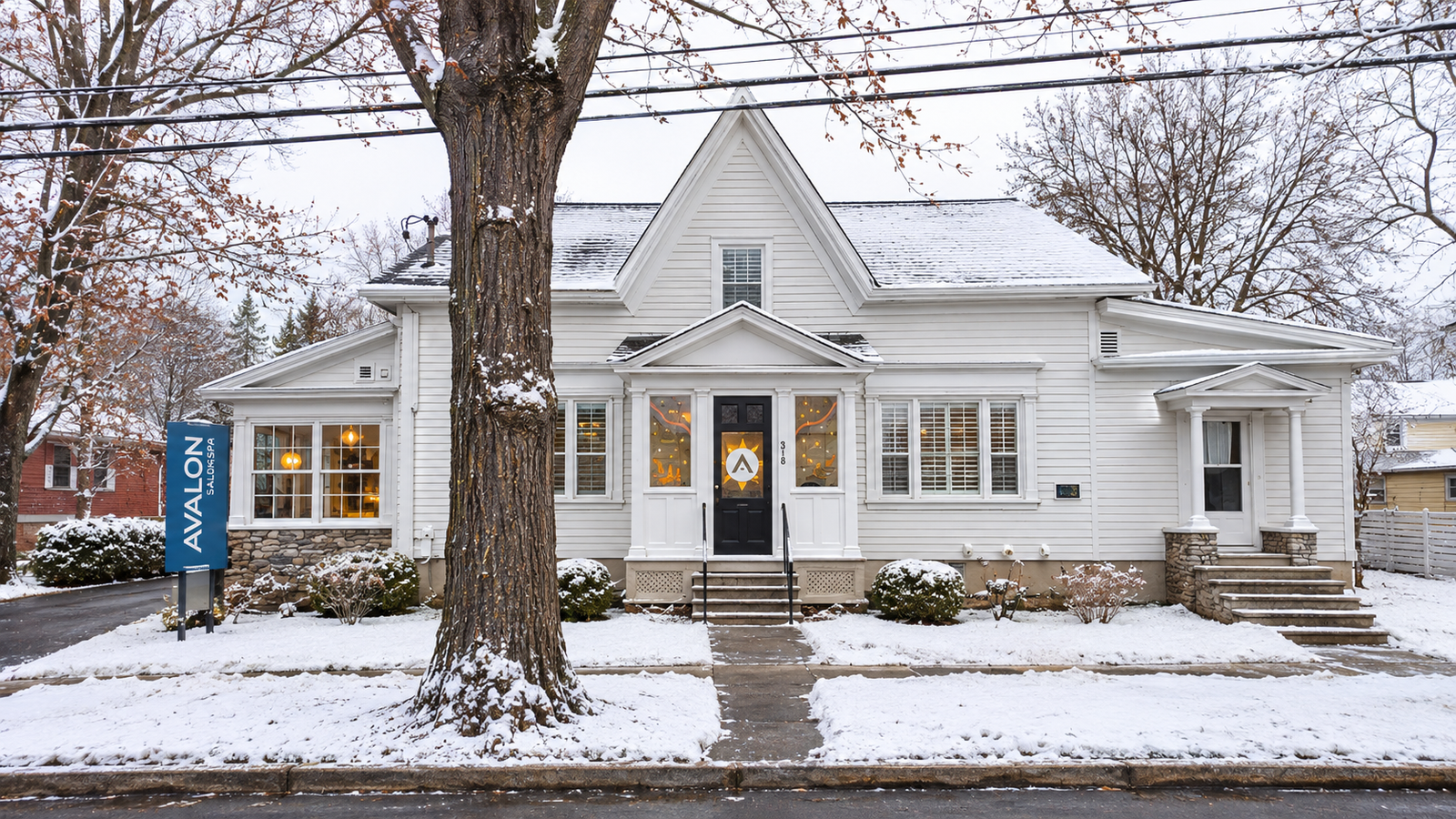
Its two-level timber-framed structure reflects a longstanding residential building tradition. The roof includes distinctive gabled forms, while generous rectangular windows contribute to the building's proportions.
Among its most interesting details are its Classical Revival porch features.
Look particularly at the enclosed entrance and the triangular architectural feature above it, known as a pediment.
It's a design element inspired by classical architecture and one that brings a sense of formality to an otherwise relatively understated residence.
That entrance helps give the property its recognizable identity.
When you pass the building, take a moment to appreciate its overall form rather than simply looking at individual decorative features.
Notice the rhythm of the windows.
The relationship between the porch and roof.
The proportions of the building.
Its presence along the street.
These are the architectural qualities that can make an older neighbourhood feel distinctive, even when we can't immediately explain why.
Of course, a building approaching two centuries in age is unlikely to have remained completely unchanged.
McNally's renovations are documented, but the available heritage description doesn't establish exactly when every surviving architectural feature was introduced.
What we're seeing today is the product of a building's evolution, not necessarily a perfectly preserved snapshot of 1835.
And that evolution is part of its story.
👨👩👧👦 The VanWart Years
Following McNally's death in 1924, the property passed into the hands of William VanWart.The VanWart family's association with the house would extend for more than fifty years.
Consider the changes Fredericton experienced during that period.
The economic difficulties of the Great Depression.
The Second World War.
The postwar housing boom.
The growing popularity of private automobiles.
The expansion of residential neighbourhoods beyond the traditional downtown.
While Fredericton was becoming a different kind of city, this Brunswick Street residence remained part of its established landscape.
Long periods of family ownership are an interesting part of residential history.
While political careers and major business achievements often receive considerable attention, the everyday stewardship of a property matters, too.
Families maintain buildings, adapt them, repair them and carry them through changing times.
Without generations of people continuing to find value in older properties, many of our historic streetscapes simply wouldn't have survived.
And that's a contribution worth recognizing.
✂️ From Historic Residence to Modern Salon
Today, 318 Brunswick Street is probably best recognized by many Fredericton residents as the downtown location of Avalon SalonSpa.Avalon is a locally owned business with three Fredericton locations, including Main Street on the north side and Trinity Avenue uptown.
Its Brunswick Street location represents another chapter in the life of this historic property.
And I think there's something particularly interesting about that transition.
A building once associated with a railway businessman and senator, a grocery merchant, a physician and generations of family life now welcomes residents for entirely different reasons.
The purpose of the property has changed.
Its role within Fredericton continues.
There's a term for this approach in heritage conservation: adaptive reuse.
Instead of abandoning or demolishing a building when its original purpose changes, adaptive reuse gives it a new function.
A former residence might become a professional office.
An industrial building might become apartments.
An old commercial property might become a restaurant.
Or, as we've seen here, a historic home can become the setting for a modern local business.
When undertaken thoughtfully, adaptive reuse can help retain the architectural identity of a neighbourhood while allowing it to respond to changing economic and community needs.
It also raises a worthwhile question.
Is a historic building better protected by keeping it exactly as it was—or by finding a new purpose that allows it to remain relevant?
I suspect the answer depends on the building.
But the Temple House provides an interesting example of how an old residence can continue contributing to contemporary downtown life.
🏘️ What Would Brunswick Street Be Without Its Old Buildings?
Imagine driving along Brunswick Street tomorrow and discovering that all its historic buildings had disappeared, replaced by entirely new construction.The street would still exist.
The intersections would still be there.
You could still get from one end to the other.
But would it feel like the same Fredericton?
Probably not.
That's because architecture contributes something beyond the practical function of providing shelter or commercial space.
It gives a community a visual identity.
The variety of rooflines, setbacks, porches, windows and building materials tells us that Fredericton wasn't constructed all at once.
It developed gradually, as different generations responded to their own needs, opportunities, challenges and architectural tastes.
That's particularly important in established downtown neighbourhoods.
You can walk past a building with roots in the early nineteenth century, a later Victorian residence and a more contemporary development, all within a relatively short distance.
Each represents a different moment in the city's development.
Together, they tell a story.
But as Fredericton continues to grow, preserving that character becomes a more complicated conversation.
Older buildings require investment. Modern accessibility standards, energy efficiency, fire safety and changing commercial needs can present practical challenges.
Not every restoration is simple, and not every building can be preserved in exactly its original form.
The question is how we balance those realities with the architectural and historical qualities that make Fredericton distinctive.
Because once a historic building disappears, constructing something that looks old isn't quite the same as preserving the real thing.
🏡 The Real Estate Perspective: Buying a Piece of History
As a REALTOR®, one of the things I appreciate about Fredericton is the variety of residential architecture available within our region.Some buyers are drawn to contemporary construction, modern systems and low-maintenance living.
Others fall in love with older homes because of their individuality, distinctive architectural features and connection to an established neighbourhood.
Neither preference is wrong.
But purchasing a historic property involves considerations that go beyond appearance.
Buyers should investigate the condition of the structure, heating and electrical systems, insulation, previous renovations and ongoing maintenance requirements.
They should also establish whether any heritage designation or preservation controls apply to the particular property and what approvals may be needed for future alterations.
A heritage inventory listing and legally enforceable restrictions aren't necessarily the same thing.
It's important to understand the difference before making plans.
Our recent Journal article, The Winter Walkthrough, explored some of the practical considerations that snow and cold weather reveal about residential properties.
Those considerations become especially interesting when evaluating houses that have been standing for a century or more.
But there's also something enormously appealing about owning a building that existed long before you arrived and may continue standing long after you've moved on.
You're not simply purchasing a property.
In a small but meaningful way, you're becoming part of its story.
❤️ The Stories We Almost Walk Past
The next time you're travelling along Brunswick Street, take a moment to notice number 318.Think about Thomas Temple and Fredericton's railway ambitions.
Think about George Hatt and the city's family-run commercial enterprises.
Think about Dr. McNally, travelling the Atlantic aboard a cable ship before returning to practise medicine in New Brunswick.
Think about the VanWart family's decades of association with the property.
And consider the local business that occupies the building today.
Nearly two centuries of possible history, all connected to one address.
What I love about stories like this is that they change the way we experience familiar places.
A house becomes something more interesting than an old building.
A railway bridge becomes more than a recreational trail.
A stone fountain becomes more than a decorative monument.
Suddenly, the city feels a little more connected.
And perhaps we become a little more curious about what else we've been walking past.
If you're drawn to Fredericton's historic neighbourhoods and would love to explore what living in one of them might look like, I'd be happy to help you discover the properties, architecture and stories that make each area unique.
But first, I'd love to hear from you.
Did you know the history behind 318 Brunswick Street?
Have you visited Avalon in this historic building? Do you remember an earlier chapter of the property's history? Perhaps your family has photographs or memories connected to Brunswick Street or the VanWart family.
And is there another historic Fredericton home you've always wondered about?
Share its address or story with us. It might just become the subject of our next Historic Home Spotlight.
Because Fredericton's history isn't confined to museums, monuments and textbooks.
Sometimes, it's standing quietly on Brunswick Street, waiting for us to notice. ❤️