❄️ Winter Accessibility, Sidewalks and Transit in Fredericton
🍁 The Rob Brown Realty JournalMonday | Fredericton Conversation
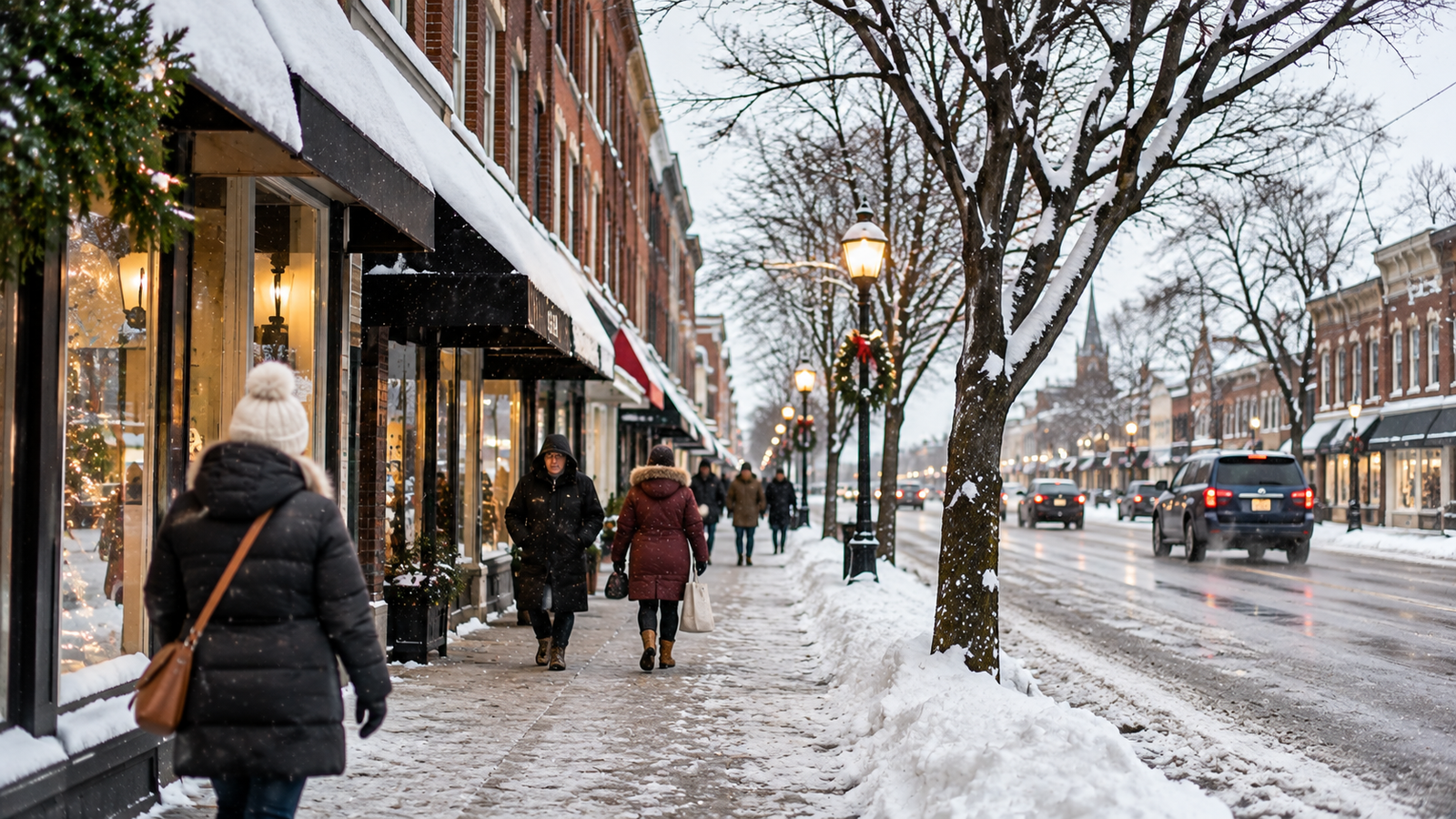
There's something undeniably beautiful about the first significant snowfall in Fredericton.
The historic homes along Waterloo Row.
The snow-covered trees in Odell Park.
Downtown storefronts glowing against the early evening darkness.
It's the kind of scenery that makes you appreciate living in New Brunswick.
Unless, of course, you're trying to push a stroller through six inches of snow.
Or navigate a wheelchair across an icy intersection.
Or climb over a snowbank to catch the bus.
Suddenly, that picturesque winter wonderland becomes something considerably less charming.
And as we welcome December, I think there's a conversation worth having:
Who is winter actually designed for?
Because while we all experience the same season, we don't necessarily experience the same city.
According to the City's published snow removal policy, the goal following a storm is to have:
🚗 All streets plowed within 24 hours.
🚶 All sidewalks cleared within 48 hours.
Major transportation routes such as Regent Street, Union Street and the Westmorland Street Bridge receive priority attention. Heavily used pedestrian areas, including downtown sidewalks and school zones, also receive priority maintenance.
Bus stop clearing, snowbank removal and addressing visibility at intersections are among the additional cleanup activities.
There are practical reasons for these priorities.
Emergency vehicles need to get through. Major transportation routes need to function. Snow removal crews have an enormous amount of ground to cover.
But let's think about those two service targets for a moment.
24 hours versus 48 hours.
For someone who drives, that difference might not mean much.
For someone who doesn't, it could mean another day of difficulty getting to work, buying groceries, attending a medical appointment or simply leaving home independently.
These are published service targets, not necessarily the actual clearing times experienced on every street or sidewalk.
Nevertheless, they raise an interesting question.
Should our most important pedestrian connections receive the same level of priority as our busiest roads?
And if we believe walking and public transit should be viable transportation options in Fredericton, should our winter maintenance priorities reflect that?
The first lives in a suburban neighbourhood, has an attached garage and drives to work.
They start the car, turn on the heated seats and make their way along freshly plowed roads.
Perhaps the commute takes a little longer than usual.
Perhaps there's some extra traffic on Regent Street.
But they get there.
The second resident lives in an apartment and relies on public transit.
They walk along a partially cleared sidewalk, navigate a slippery intersection and reach a bus stop surrounded by snow.
There's nowhere comfortable to stand.
The wind is blowing.
And getting onto the bus may require negotiating a ridge of snow left near the curb.
Same city.
Same snowfall.
Two very different mornings.
Now imagine making that second journey using a wheelchair, living with arthritis, having a visual impairment or accompanying a small child.
What was inconvenient becomes considerably more difficult.
And for some people, it becomes impossible.
Winter doesn't necessarily create accessibility problems. Sometimes it simply makes existing problems impossible to ignore.
The historic homes along Waterloo Row.
The snow-covered trees in Odell Park.
Downtown storefronts glowing against the early evening darkness.
It's the kind of scenery that makes you appreciate living in New Brunswick.
Unless, of course, you're trying to push a stroller through six inches of snow.
Or navigate a wheelchair across an icy intersection.
Or climb over a snowbank to catch the bus.
Suddenly, that picturesque winter wonderland becomes something considerably less charming.
And as we welcome December, I think there's a conversation worth having:
Who is winter actually designed for?
Because while we all experience the same season, we don't necessarily experience the same city.
⏱️ 24 Hours Versus 48 Hours
Let's start with something you might not know about Fredericton.According to the City's published snow removal policy, the goal following a storm is to have:
🚗 All streets plowed within 24 hours.
🚶 All sidewalks cleared within 48 hours.
Major transportation routes such as Regent Street, Union Street and the Westmorland Street Bridge receive priority attention. Heavily used pedestrian areas, including downtown sidewalks and school zones, also receive priority maintenance.
Bus stop clearing, snowbank removal and addressing visibility at intersections are among the additional cleanup activities.
There are practical reasons for these priorities.
Emergency vehicles need to get through. Major transportation routes need to function. Snow removal crews have an enormous amount of ground to cover.
But let's think about those two service targets for a moment.
24 hours versus 48 hours.
For someone who drives, that difference might not mean much.
For someone who doesn't, it could mean another day of difficulty getting to work, buying groceries, attending a medical appointment or simply leaving home independently.
These are published service targets, not necessarily the actual clearing times experienced on every street or sidewalk.
Nevertheless, they raise an interesting question.
Should our most important pedestrian connections receive the same level of priority as our busiest roads?
And if we believe walking and public transit should be viable transportation options in Fredericton, should our winter maintenance priorities reflect that?
🚙 Same City. Same Snowfall. Two Very Different Mornings.
Imagine two Fredericton residents heading to work on the morning after a snowfall.The first lives in a suburban neighbourhood, has an attached garage and drives to work.
They start the car, turn on the heated seats and make their way along freshly plowed roads.
Perhaps the commute takes a little longer than usual.
Perhaps there's some extra traffic on Regent Street.
But they get there.
The second resident lives in an apartment and relies on public transit.
They walk along a partially cleared sidewalk, navigate a slippery intersection and reach a bus stop surrounded by snow.
There's nowhere comfortable to stand.
The wind is blowing.
And getting onto the bus may require negotiating a ridge of snow left near the curb.
Same city.
Same snowfall.
Two very different mornings.
Now imagine making that second journey using a wheelchair, living with arthritis, having a visual impairment or accompanying a small child.
What was inconvenient becomes considerably more difficult.
And for some people, it becomes impossible.
Winter doesn't necessarily create accessibility problems. Sometimes it simply makes existing problems impossible to ignore.
🚶 The Sidewalk That Suddenly Disappears
Fredericton takes considerable pride in its trails, walkability and outdoor lifestyle.And rightly so.
From the Town Plat to Marysville, from the South Riverfront Trail to the Bill Thorpe Walking Bridge, there are wonderful opportunities to enjoy our city without a vehicle.
But winter introduces an important distinction.
There's a difference between having a sidewalk and having a sidewalk that people can actually use.
A cleared stretch of pavement doesn't help much if the next intersection is blocked by a snowbank.
A perfectly maintained section of sidewalk can become inaccessible because of a single icy curb ramp.
A pedestrian route that feels comfortable in October might feel entirely different in January.
For someone using a walker or wheelchair, even a relatively small ridge of compacted snow can be a significant barrier.
For someone with limited vision, snow can obscure familiar landmarks, curb edges and tactile walking surfaces.
For parents pushing strollers, narrow cleared paths can make an ordinary trip surprisingly challenging.
And for older residents concerned about falling, uncertainty about sidewalk conditions may be enough to keep them home altogether.
Here's something worth considering.
If nine out of ten sections of a pedestrian route are accessible, but the tenth prevents someone from completing their journey, is that route really accessible?
Accessibility isn't simply about whether a route exists. It's about whether the entire journey is usable.
🚌 A Bus You Can't Reach Isn't Much Help
Fredericton Transit provides an important connection between residential neighbourhoods, downtown, the universities, shopping areas and other destinations.For many residents, taking the bus isn't simply an environmental lifestyle choice.
It's how they get to work.
How they attend classes.
How they buy groceries.
How they reach medical appointments.
And how they maintain their independence.
But a transit system is only as accessible as the journey to and from it.
A bus can have excellent accessibility features, but what happens if a passenger can't reach the boarding area?
What happens when a snowbank separates the sidewalk from the bus?
Or when someone has to wait outside in freezing rain without adequate shelter?
Or when a missed connection means standing in the cold considerably longer than expected?
Think about a student travelling from downtown toward UNB or St. Thomas University.
Anyone familiar with Fredericton's hill knows that a steep walk can be challenging enough on a perfectly dry day.
Add ice, snow and a heavy backpack, and suddenly that journey requires a little more determination.
Now imagine making it with limited mobility.
To its credit, Fredericton has recognized some of these challenges.
Fredericton Transit provides accessibility features on its buses, identifies accessible stops and establishes winter maintenance priorities. The City also completed a new transit winter storm plan in March 2026.
Those are encouraging steps.
But the real measure of success is whether people can consistently complete their journeys.
What good is an accessible bus if the journey to reach it isn't accessible?
🧓 When Winter Makes Your World Smaller
One of the less visible consequences of winter is isolation.Imagine an older Fredericton resident who normally walks to the grocery store, visits friends, attends community activities or enjoys a daily stroll around the neighbourhood.
Then winter arrives.
The sidewalks become unpredictable.
Daylight disappears earlier.
The fear of falling increases.
Perhaps they decide not to go out today.
Then tomorrow.
Then the rest of the week.
Before long, activities that once provided exercise, independence and social connection become much less frequent.
And that matters.
Going for coffee.
Visiting the Fredericton Public Library.
Attending a community event.
Picking up a prescription.
Meeting a friend for lunch.
These are ordinary activities that help people feel connected to their community.
When winter makes them difficult, the consequences extend far beyond transportation.
New Brunswick has a relatively old population compared with Canada as a whole, making year-round accessibility an especially important consideration for our communities.
We often talk about helping people age in place.
But aging in place isn't just about having a suitable home.
It's also about being able to leave that home and participate in community life.
Growing older shouldn't mean having to put your independence into storage every November.
👶 The Stroller Test
Here's a little experiment for anyone who wants to understand winter accessibility differently.Imagine pushing a stroller from your front door to the nearest grocery store.
Or to a bus stop.
Or to a friend's house.
Now picture that same journey after a significant snowfall.
Where would you cross the street?
Could you get through the snowbanks at intersections?
Would the cleared sidewalk be wide enough?
Could you manage the trip without stepping into traffic?
Anyone who has tried pushing a stroller through heavy, wet snow knows that it can feel suspiciously like participating in a winter sporting event nobody signed up for. 😄
But there's a bigger lesson here.
Features that improve accessibility for one group often benefit many others.
A properly cleared curb ramp helps wheelchair users, parents with strollers, people using walkers and someone pulling a shopping trolley.
A well-maintained sidewalk benefits children walking to school, employees heading to work and residents walking their dogs.
A sheltered bus stop benefits almost everyone waiting for transit.
Accessible design isn't about creating a separate city for people with disabilities. It's about creating a better city for more people.
And at some point in our lives, many of us will benefit from those improvements ourselves.
🌨️ Where Does All the Snow Go?
Of course, there's another side to this conversation.Snow removal isn't easy.
Fredericton has an extensive network of streets, sidewalks, intersections, trails and public spaces to maintain.
Storms vary.
Temperatures fluctuate.
Equipment has limitations.
Crews have to prioritize routes, manage resources and respond to changing conditions.
And anyone who has cleared their driveway only to watch a snowplow deposit another ridge of snow across the entrance understands that moving snow doesn't necessarily make it disappear.
It simply puts it somewhere else.
That's where winter planning gets interesting.
When snow is pushed off the road, where does it accumulate?
Does it block a pedestrian crossing?
Does it reduce visibility at an intersection?
Does it interfere with access to a bus stop?
Does it narrow a sidewalk?
Does it occupy an accessible parking space?
These questions aren't about criticizing the people operating snowplows.
Those crews do demanding work, often in difficult conditions and at hours when most of us are comfortably asleep.
The bigger question is how we plan for snow storage, removal and accessibility together.
Clearing one person's route shouldn't unintentionally eliminate someone else's.
🧊 The New Brunswick Freeze-Thaw Special
There's another particularly frustrating part of our winter experience.The temperature rises.
The snow melts.
Water collects along sidewalks and driveways.
Then the temperature drops again.
And suddenly, yesterday's puddle becomes today's skating rink.
Without the benefit of a Zamboni.
New Brunswick's changing winter temperatures can make ice management just as important as snow removal.
A sidewalk may appear cleared while still being difficult or dangerous to navigate.
Poor drainage, compacted snow and repeated freezing can create persistent trouble spots.
For someone who is physically able to navigate a slippery surface, that might mean walking a little more carefully.
For someone with limited mobility or a higher risk of falling, it might mean cancelling their plans altogether.
Perhaps we need to rethink how we define a cleared sidewalk.
Is the snow gone?
Or is the sidewalk actually usable?
Those aren't necessarily the same thing.
🏙️ Are We Designing a Winter City or a Summer City?
We live in a part of Canada where winter is neither unusual nor unexpected.It arrives every year.
And yet, sometimes it feels as though we design communities for summer and then spend several months trying to make them function in winter.
What would happen if we approached things differently?
What if winter accessibility were considered from the beginning when designing streets, neighbourhoods and public spaces?
That might mean thinking about:
❄️ Dedicated snow storage areas that don't obstruct pedestrian routes.
🚶 Continuous sidewalks and accessible curb ramps throughout neighbourhoods.
🚌 Transit shelters that offer meaningful protection from the weather.
💡 Better pedestrian lighting during short winter days.
🧊 Drainage that reduces persistent ice buildup.
🛍️ Connections between residential areas and essential services.
🏘️ New housing developments that integrate walking, transit and accessibility from the beginning.
Interestingly, Fredericton's planning policies for its southeast development area already address snow storage, pedestrian movement and universally accessible design.
That's a positive indication that these issues are being considered in future development.
But what about our existing neighbourhoods?
How do we improve the streets, intersections and public spaces that were designed decades ago?
And how do we make sure new development doesn't repeat the mistakes of the past?
The neighbourhoods we're building today will experience decades of New Brunswick winters.
Getting the design right now matters.
🏡 The Real Estate Reality: Winter Is Part of the Location
When buyers look at homes, it's easy to focus on the property itself.The kitchen.
The bedrooms.
The garage.
The backyard.
But winter can reveal things about a location that aren't immediately obvious during a summer showing.
Consider an older home in Fredericton's Town Plat.
Its proximity to downtown might make walking to shops, restaurants and services an attractive feature.
But how well do the surrounding pedestrian routes function after a snowfall?
Or consider a property in Lincoln Heights or Southwood Park.
How easily can residents reach transit stops, schools and nearby services during winter?
In Nashwaaksis, how comfortable is the actual walking route from a particular home to the businesses along Main Street?
And in Hanwell or New Maryland, where some properties offer more space and privacy, how much does daily life depend on having access to a vehicle?
There isn't one correct answer.
Some buyers genuinely prefer a rural lifestyle and are comfortable with winter driving and maintaining a longer driveway.
Others want the independence that comes with living closer to everyday services.
And those priorities can change over time.
A neighbourhood that works perfectly for you at 35 might not offer the same convenience at 75.
A household with two vehicles might eventually become a one-vehicle household.
An injury or unexpected health change could temporarily or permanently affect someone's mobility.
That's why winter accessibility deserves a place in the homebuying conversation.
Don't just ask whether a property fits your life today. Ask how well it might support your life as it changes.
💰 Where Should Our Winter Priorities Be?
Now here's where I'd really like to hear what Fredericton residents think.Municipal resources aren't unlimited.
Equipment costs money.
Staffing costs money.
Removing and transporting accumulated snow costs money.
Improving drainage, sidewalks and transit infrastructure requires investment.
And every decision involves competing priorities.
So, if we want better winter accessibility, how should we approach it?
Should sidewalks connecting residential neighbourhoods to grocery stores, pharmacies and transit stops receive greater priority?
Should accessible pedestrian crossings and bus boarding areas have specific clearing targets?
Should the City expand winter maintenance on key active transportation routes?
Should new developments be required to provide more dedicated space for snow storage?
Would residents support additional municipal spending if it meant more reliable winter pedestrian access?
Or could meaningful improvements be made by changing existing priorities and coordinating maintenance differently?
There are no particularly easy answers.
But these are exactly the kinds of conversations we should be having.
Especially as Fredericton continues to grow.
Because investing in accessibility isn't simply about convenience.
It's about who gets to participate in our community, who can remain independent and who faces additional barriers to everyday life.
🤝 Who Is Being Included in the Conversation?
Perhaps the most important question isn't how much snow we're clearing.It's whose experiences we're considering when making decisions.
Someone who drives everywhere may have a very different understanding of winter accessibility than someone who uses a wheelchair or depends on public transit.
A university student walking up the hill may experience winter differently from a retiree living downtown.
A parent pushing a stroller may notice obstacles that another pedestrian walks past without a second thought.
And someone who has stopped going out because of winter conditions might not be visible in conversations about pedestrian activity at all.
That's why lived experience matters.
If fewer people are walking during winter, is it because they don't want to?
Or because we've made it too difficult?
There's a meaningful difference.
We shouldn't mistake an absence of pedestrians for an absence of demand.
❤️ Bringing It Home...
I love a beautiful New Brunswick winter.The snowy landscapes.
The quiet mornings.
The outdoor adventures.
The excuse to have another cup of coffee.
But we can appreciate the beauty of winter while acknowledging that it creates very real challenges for some of our neighbours.
A community isn't truly accessible if its accessibility disappears with the first significant snowfall.
And a city that works wonderfully for people with vehicles should also work for people who don't drive, can't drive or simply prefer another way of getting around.
If you're considering a move within Fredericton or its surrounding communities, take some time this winter to experience the neighbourhoods you're interested in. Look beyond the house and consider how the location supports your everyday routine, your independence and your long-term plans.
But today, I'd particularly love to hear from people who already call Fredericton home.
If you could change ONE thing about how Fredericton functions during winter, what would it be?
🚶 Faster sidewalk clearing?
🚌 Better access to bus stops?
♿ More attention to accessible crossings?
🧊 Better ice management?
💡 Improved pedestrian lighting?
💰 Different municipal spending priorities?
Or perhaps you think Fredericton is already striking a reasonable balance, given our weather and available resources.
Tell us that, too.
I'd especially love to hear from residents who rely on public transit, use mobility aids, walk to work or experience our city differently from someone who drives everywhere.
What works?
What doesn't?
What do you wish more people understood?
Let's make this a constructive conversation about the kind of winter city we want Fredericton to become.
Because the best way to understand how well our city works isn't necessarily to look through the windshield of a warm vehicle.
Sometimes, it's to experience the journey from someone else's point of view.
Winter belongs to all of us. Our city should, too. ❤️