🏚️ Buying an Older Home in Fredericton? The Hidden Costs Behind Cosmetic Renovations
🍁 The Rob Brown Realty JournalTuesday | Fredericton Real Estate
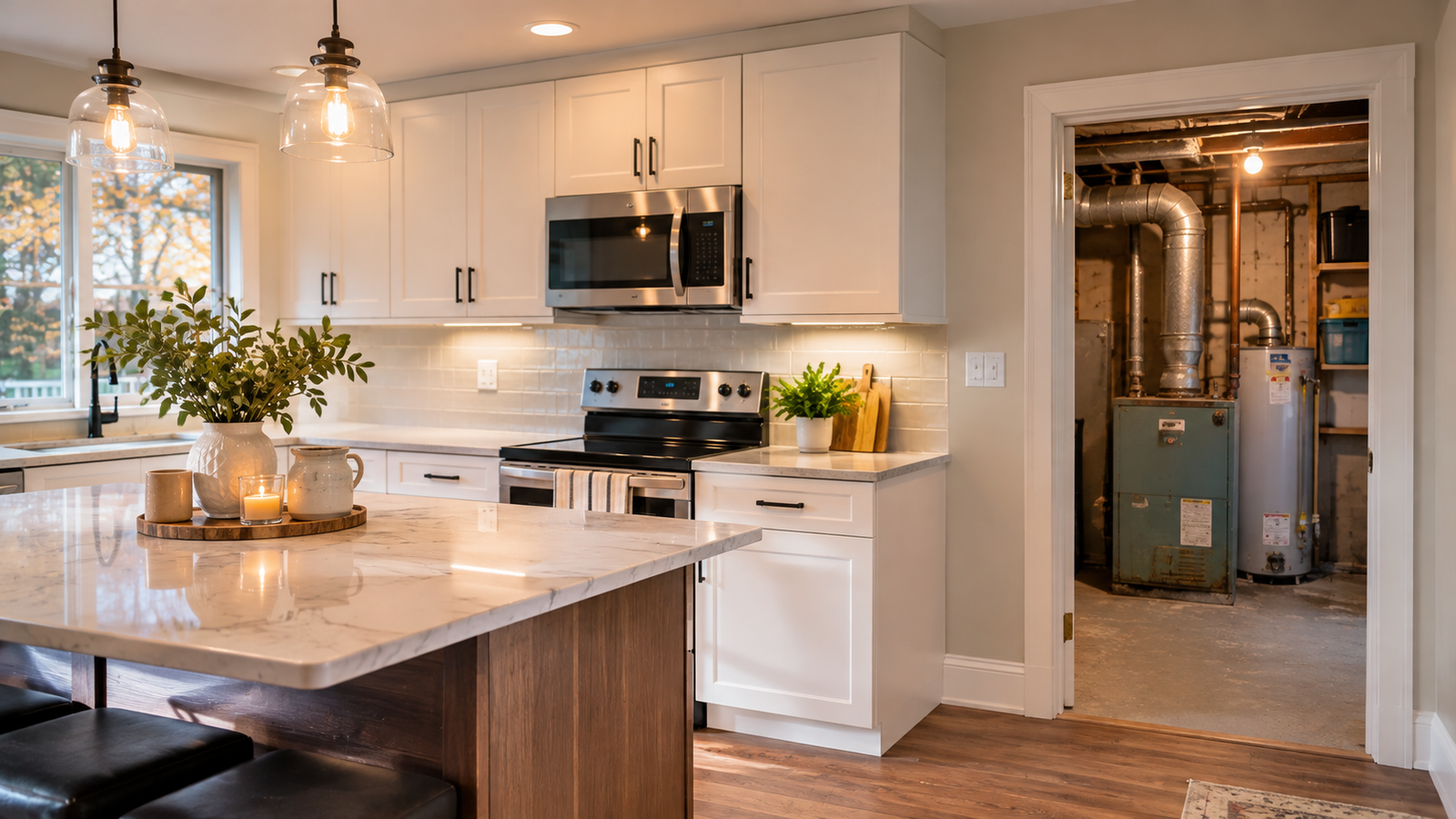
You walk into a house.
The walls are freshly painted.
The kitchen has beautiful quartz countertops.
There's new flooring throughout the main level.
The bathroom looks like something straight out of a home design magazine.
And the lighting?
Perfect.
You can already picture your furniture in the living room.
Maybe you've even mentally invited everyone over for Christmas.
Then you head downstairs.
And there's a slightly different smell.
Nothing overwhelming.
Just a little musty.
The furnace looks like it remembers the early 1990s.
There's an electrical panel that could use a closer look.
And when you ask about the roof, the answer is:
"We're not exactly sure how old it is."
Ah.
Welcome to what I call the renovation illusion.
The moment when a home looks beautifully updated—but the expensive stuff might still be waiting for you.
And in Fredericton, where we have everything from century-old downtown homes to mid-century bungalows and 1980s family houses, it's a conversation worth having.
Because here's something every buyer should remember.
A renovated home isn't necessarily a well-maintained home.
And a home that looks dated isn't necessarily a bad investment.
Let's talk about why.
They work.
Fresh paint makes rooms feel brighter.
New flooring creates a sense of continuity.
Updated fixtures make bathrooms feel modern.
And a refreshed kitchen can completely change how buyers experience a home.
There's nothing wrong with that.
In fact, cosmetic renovations can add genuine value.
But there's an important distinction.
Cosmetic improvements change how a home looks. Major maintenance and system upgrades change how it performs.
A beautiful kitchen doesn't tell you whether the basement has ever flooded.
New flooring doesn't confirm that the subfloor is sound.
And freshly painted walls don't reveal the condition of the wiring behind them.
That's not to suggest every renovated home is hiding something.
Many sellers renovate thoughtfully and maintain their homes exceptionally well.
The problem begins when buyers assume that because a house looks new, everything underneath must be new too.
That's where expensive surprises can happen.
Think about the older character homes in Downtown Fredericton and the Town Plat.
Some have beautiful woodwork, distinctive architecture and details you simply don't find in newer construction.
Then there are the established neighbourhoods of The Hill, with homes from different decades and a wide range of styles.
Over in Nashwaaksis, you'll find many mid-century houses with practical layouts, mature lots and the kind of neighbourhood character that develops over generations.
And in areas like Southwood Park, older homes can offer generous yards and convenient access to schools, shopping and everyday services.
These properties can be wonderful places to live.
But age brings questions.
A house built in 1955 doesn't have the same construction history as one built in 1995.
And neither should be evaluated as though it were built yesterday.
That doesn't make older homes inferior.
It simply means buyers need to understand what has changed over time—and what hasn't.
Both are listed at $399,900.
Both have three bedrooms.
Both are in established Fredericton neighbourhoods.
And both are approximately 50 years old.
But their owners have spent money very differently.
🏠 Home A: The Showstopper
The kitchen has been renovated.
The flooring is new.
The walls are freshly painted.
The bathrooms look fantastic.
The house photographs beautifully.
But the roof is nearing the end of its expected service life.
The heating system is aging.
And there's limited documentation about past basement moisture.
🏠 Home B: The Quiet Achiever
The kitchen cabinets are older.
The bathroom tile is dated.
The walls could use some fresh paint.
And the flooring isn't going to win any design awards.
But the roof was replaced recently.
The electrical system has been professionally updated.
The heating equipment has been serviced and documented.
And the owner has records of drainage improvements.
Which one is the better buy?
Here's the frustrating answer.
It depends.
On the condition of each home.
On the actual costs of any needed work.
On the buyer's budget.
And on how much risk they're comfortable taking.
But here's what I can tell you.
The prettier home isn't automatically the better value.
And the dated home isn't automatically the more expensive one to own.
Sometimes the biggest improvements are the ones that never make it into the listing photos.
But appearances only tell part of the story.
Age, installation quality, ventilation, flashing and previous repairs all matter.
And replacing a roof is rarely anyone's idea of a fun way to spend money.
For a typical detached home, replacement can run into the thousands or tens of thousands of dollars depending on the roof's size, complexity, materials and underlying conditions.
The important questions aren't simply whether the shingles look good.
They're when the roof was installed, what work was completed, and whether there have been any leaks.
An older furnace, boiler or heat pump may still be working.
But that doesn't necessarily mean it's efficient, reliable or inexpensive to operate.
And replacing heating equipment can become a major expense.
In Fredericton, where homes may have electric baseboards, oil-fired systems, heat pumps or combinations of heating methods, it's important to understand exactly what you're buying.
Ask about the system's age.
Review service records.
And whenever possible, look at actual energy costs.
A beautiful living room won't feel nearly as impressive if you're uncomfortable all winter.
A house may have new light fixtures, modern switches and stylish recessed lighting.
But that doesn't tell you whether the underlying wiring, panel and circuits are suitable for today's needs.
Older homes may have electrical systems that have been modified over several decades.
Some updates may have been professionally completed.
Others may need further evaluation.
And certain electrical conditions can create safety or insurance concerns.
A qualified electrician can help identify what needs attention.
New fixtures are not the same thing as an updated electrical system.
With the Saint John River, the Nashwaak River and other waterways nearby, water management deserves careful consideration.
But flooding isn't limited to riverfront properties.
Surface drainage, groundwater, grading, foundation conditions and heavy rainfall can all affect a home.
An older basement might have experienced occasional moisture.
Or it might have remained dry for decades.
The key is understanding its history.
Look for evidence of past water entry.
Ask about drainage improvements.
Review any available documentation.
And consider whether a property-specific flood-risk assessment is appropriate.
Fresh paint on basement walls can be perfectly innocent.
But it shouldn't replace a proper evaluation of the foundation and moisture conditions.
But they don't automatically solve every comfort or efficiency issue.
Insulation levels, attic ventilation, air sealing and overall building-envelope performance also matter.
Older homes can lose heat through multiple pathways.
And improving energy efficiency may involve more than replacing a few windows.
An energy assessment can help identify where improvements are likely to make the greatest difference.
Because sometimes the most valuable renovation isn't something your guests will ever notice.
It's the one that makes the house warmer and less expensive to operate.
Imagine you've found a beautifully updated home.
The kitchen renovation looks like it could have cost $25,000.
The finishes are modern.
The appliances are attractive.
And everything feels move-in ready.
But during the inspection process, you discover that several major components may need attention.
Let's use a hypothetical example.
The roof may require replacement in the near future.
Estimated planning allowance: $12,000.
The heating system is nearing replacement.
Estimated planning allowance: $9,000.
Electrical improvements are recommended.
Estimated planning allowance: $4,000.
That's $25,000 in potential work.
And suddenly, that beautiful kitchen feels a little different.
Now, these are illustrative figures, not contractor quotations. Actual costs can vary significantly depending on the home, the work required and local pricing.
The point isn't that cosmetic renovations are bad.
It's that the money spent making a home look beautiful may have little relationship to the money still needed to maintain it.
And buyers should understand both.
🔍 When were the major systems last replaced?
Think roof, heating, electrical, plumbing and windows.
📋 Are there invoices, permits or warranties?
A seller's recollection can be helpful, but documentation adds clarity.
💧 Has the property ever experienced water intrusion?
Ask about basements, roofs, plumbing leaks and drainage issues.
🛠️ Who completed the renovations?
Were they done by qualified professionals where required? Were permits obtained when necessary?
You walk into a house.
The walls are freshly painted.
The kitchen has beautiful quartz countertops.
There's new flooring throughout the main level.
The bathroom looks like something straight out of a home design magazine.
And the lighting?
Perfect.
You can already picture your furniture in the living room.
Maybe you've even mentally invited everyone over for Christmas.
Then you head downstairs.
And there's a slightly different smell.
Nothing overwhelming.
Just a little musty.
The furnace looks like it remembers the early 1990s.
There's an electrical panel that could use a closer look.
And when you ask about the roof, the answer is:
"We're not exactly sure how old it is."
Ah.
Welcome to what I call the renovation illusion.
The moment when a home looks beautifully updated—but the expensive stuff might still be waiting for you.
And in Fredericton, where we have everything from century-old downtown homes to mid-century bungalows and 1980s family houses, it's a conversation worth having.
Because here's something every buyer should remember.
A renovated home isn't necessarily a well-maintained home.
And a home that looks dated isn't necessarily a bad investment.
Let's talk about why.
✨ The Power of a Beautiful First Impression
There's a reason sellers invest in cosmetic updates before putting a house on the market.They work.
Fresh paint makes rooms feel brighter.
New flooring creates a sense of continuity.
Updated fixtures make bathrooms feel modern.
And a refreshed kitchen can completely change how buyers experience a home.
There's nothing wrong with that.
In fact, cosmetic renovations can add genuine value.
But there's an important distinction.
Cosmetic improvements change how a home looks. Major maintenance and system upgrades change how it performs.
A beautiful kitchen doesn't tell you whether the basement has ever flooded.
New flooring doesn't confirm that the subfloor is sound.
And freshly painted walls don't reveal the condition of the wiring behind them.
That's not to suggest every renovated home is hiding something.
Many sellers renovate thoughtfully and maintain their homes exceptionally well.
The problem begins when buyers assume that because a house looks new, everything underneath must be new too.
That's where expensive surprises can happen.
🏡 Fredericton's Older Homes Have Stories to Tell
One of the things I appreciate about Fredericton real estate is the variety of housing we have.Think about the older character homes in Downtown Fredericton and the Town Plat.
Some have beautiful woodwork, distinctive architecture and details you simply don't find in newer construction.
Then there are the established neighbourhoods of The Hill, with homes from different decades and a wide range of styles.
Over in Nashwaaksis, you'll find many mid-century houses with practical layouts, mature lots and the kind of neighbourhood character that develops over generations.
And in areas like Southwood Park, older homes can offer generous yards and convenient access to schools, shopping and everyday services.
These properties can be wonderful places to live.
But age brings questions.
A house built in 1955 doesn't have the same construction history as one built in 1995.
And neither should be evaluated as though it were built yesterday.
That doesn't make older homes inferior.
It simply means buyers need to understand what has changed over time—and what hasn't.
🔧 The Renovations You Don't See
Let's imagine two homes.Both are listed at $399,900.
Both have three bedrooms.
Both are in established Fredericton neighbourhoods.
And both are approximately 50 years old.
But their owners have spent money very differently.
🏠 Home A: The Showstopper
The kitchen has been renovated.
The flooring is new.
The walls are freshly painted.
The bathrooms look fantastic.
The house photographs beautifully.
But the roof is nearing the end of its expected service life.
The heating system is aging.
And there's limited documentation about past basement moisture.
🏠 Home B: The Quiet Achiever
The kitchen cabinets are older.
The bathroom tile is dated.
The walls could use some fresh paint.
And the flooring isn't going to win any design awards.
But the roof was replaced recently.
The electrical system has been professionally updated.
The heating equipment has been serviced and documented.
And the owner has records of drainage improvements.
Which one is the better buy?
Here's the frustrating answer.
It depends.
On the condition of each home.
On the actual costs of any needed work.
On the buyer's budget.
And on how much risk they're comfortable taking.
But here's what I can tell you.
The prettier home isn't automatically the better value.
And the dated home isn't automatically the more expensive one to own.
Sometimes the biggest improvements are the ones that never make it into the listing photos.
💸 What Could Be Waiting Behind the Paint?
Let's look at a few of the expenses buyers should be thinking about when considering an older home.🏠 1. The Roof
A roof can look perfectly fine from the driveway.But appearances only tell part of the story.
Age, installation quality, ventilation, flashing and previous repairs all matter.
And replacing a roof is rarely anyone's idea of a fun way to spend money.
For a typical detached home, replacement can run into the thousands or tens of thousands of dollars depending on the roof's size, complexity, materials and underlying conditions.
The important questions aren't simply whether the shingles look good.
They're when the roof was installed, what work was completed, and whether there have been any leaks.
🔥 2. Heating Systems
New Brunswick winters have a way of reminding us that heating isn't optional.An older furnace, boiler or heat pump may still be working.
But that doesn't necessarily mean it's efficient, reliable or inexpensive to operate.
And replacing heating equipment can become a major expense.
In Fredericton, where homes may have electric baseboards, oil-fired systems, heat pumps or combinations of heating methods, it's important to understand exactly what you're buying.
Ask about the system's age.
Review service records.
And whenever possible, look at actual energy costs.
A beautiful living room won't feel nearly as impressive if you're uncomfortable all winter.
⚡ 3. Electrical Systems
This is one of those areas where appearances can be especially misleading.A house may have new light fixtures, modern switches and stylish recessed lighting.
But that doesn't tell you whether the underlying wiring, panel and circuits are suitable for today's needs.
Older homes may have electrical systems that have been modified over several decades.
Some updates may have been professionally completed.
Others may need further evaluation.
And certain electrical conditions can create safety or insurance concerns.
A qualified electrician can help identify what needs attention.
New fixtures are not the same thing as an updated electrical system.
💧 4. Basements and Water Management
Now we're getting into territory that's particularly relevant in parts of the Fredericton region.With the Saint John River, the Nashwaak River and other waterways nearby, water management deserves careful consideration.
But flooding isn't limited to riverfront properties.
Surface drainage, groundwater, grading, foundation conditions and heavy rainfall can all affect a home.
An older basement might have experienced occasional moisture.
Or it might have remained dry for decades.
The key is understanding its history.
Look for evidence of past water entry.
Ask about drainage improvements.
Review any available documentation.
And consider whether a property-specific flood-risk assessment is appropriate.
Fresh paint on basement walls can be perfectly innocent.
But it shouldn't replace a proper evaluation of the foundation and moisture conditions.
🪟 5. Windows, Insulation and Air Leakage
New windows can make a home look fantastic.But they don't automatically solve every comfort or efficiency issue.
Insulation levels, attic ventilation, air sealing and overall building-envelope performance also matter.
Older homes can lose heat through multiple pathways.
And improving energy efficiency may involve more than replacing a few windows.
An energy assessment can help identify where improvements are likely to make the greatest difference.
Because sometimes the most valuable renovation isn't something your guests will ever notice.
It's the one that makes the house warmer and less expensive to operate.
🧮 A $25,000 Kitchen or a $25,000 Problem?
Let's put this into perspective.Imagine you've found a beautifully updated home.
The kitchen renovation looks like it could have cost $25,000.
The finishes are modern.
The appliances are attractive.
And everything feels move-in ready.
But during the inspection process, you discover that several major components may need attention.
Let's use a hypothetical example.
The roof may require replacement in the near future.
Estimated planning allowance: $12,000.
The heating system is nearing replacement.
Estimated planning allowance: $9,000.
Electrical improvements are recommended.
Estimated planning allowance: $4,000.
That's $25,000 in potential work.
And suddenly, that beautiful kitchen feels a little different.
Now, these are illustrative figures, not contractor quotations. Actual costs can vary significantly depending on the home, the work required and local pricing.
The point isn't that cosmetic renovations are bad.
It's that the money spent making a home look beautiful may have little relationship to the money still needed to maintain it.
And buyers should understand both.
🚩 Five Questions Worth Asking Before You Fall in Love
When you're touring an older home, here are five questions I'd encourage you to keep in mind.🔍 When were the major systems last replaced?
Think roof, heating, electrical, plumbing and windows.
📋 Are there invoices, permits or warranties?
A seller's recollection can be helpful, but documentation adds clarity.
💧 Has the property ever experienced water intrusion?
Ask about basements, roofs, plumbing leaks and drainage issues.
🛠️ Who completed the renovations?
Were they done by qualified professionals where required? Were permits obtained when necessary?
💰 What expenses could reasonably arise over the next five years?
No one can predict every repair, but understanding the age and condition of major components can help you plan.
These questions aren't about finding a perfect house.
There is no perfect house.
They're about understanding what you're buying before you're financially committed.
A home inspection isn't just another box to check.
It's an opportunity to learn about the property.
A qualified home inspector can assess visible and accessible components, identify concerns and recommend further evaluation where appropriate.
But inspections have limitations.
An inspector generally can't see behind finished walls.
They can't guarantee a basement will never leak.
And they can't predict exactly when a furnace will fail.
That's why some properties may benefit from additional assessments by electricians, roofers, heating specialists, engineers or other qualified professionals.
The goal isn't to eliminate every risk. It's to make an informed decision about the risks you can identify.
And that's especially important when a house has undergone extensive renovations.
Because sometimes the most important questions are about the work you can't see.
Because there's another side to the renovation illusion.
Sometimes buyers walk into an older home and immediately dismiss it because the kitchen cabinets are dated.
Or the carpet isn't their style.
Or the bathroom has a colour scheme that should probably have stayed in 1987.
I understand.
It's hard to imagine living in a house when the finishes don't feel like you.
But here's something worth remembering.
Cosmetic changes are often easier to plan and phase than major structural or system repairs.
Painting can happen over a weekend.
Flooring can be replaced room by room.
Cabinets can sometimes be refinished.
And a bathroom doesn't necessarily need to be completely gutted to feel refreshed.
Of course, cosmetic projects can still be expensive.
And some buyers genuinely need a move-in-ready home.
That's completely reasonable.
But if a dated property has been well maintained, it may deserve a closer look.
Sometimes the house that needs a little imagination offers more long-term value than the one that looks perfect on day one.
Buyers often make emotional connections with homes.
And they should.
You're not just buying a collection of building materials.
You're buying somewhere to live.
A place for family dinners.
Quiet mornings.
Birthday parties.
And ordinary Tuesday evenings.
But emotion needs to be balanced with information.
When you're comparing properties, look beyond the listing photos.
Think about the age of the home.
The maintenance history.
The condition of major systems.
The potential for future expenses.
And whether the property fits your financial comfort zone.
A house can be beautifully renovated and still require substantial maintenance.
A house can be cosmetically dated and still be in excellent condition.
And sometimes, a home offers both attractive updates and solid underlying maintenance.
That's the ideal combination.
But you need to look carefully to know what you're getting.
Imagine you're choosing between two similarly priced homes.
One has a stunning kitchen, updated bathrooms and beautiful flooring—but several major systems are aging.
The other has dated finishes but a newer roof, updated electrical work and documented maintenance.
Which one would you rather buy?
The move-in-ready look?
Or the peace of mind that comes from knowing some of the bigger expenses have already been addressed?
There's no universal right answer.
Your budget, priorities, renovation experience and tolerance for disruption all matter.
But it's a conversation worth having before you start shopping.
Because the best home isn't necessarily the one that photographs beautifully.
It's the one that makes sense for your life—and your finances.
Then look a little deeper.
Ask about the roof.
The heating.
The electrical system.
The basement.
And the work that's been done over the years.
Because fresh paint is wonderful.
New flooring is lovely.
And a beautifully renovated bathroom can make every morning feel a little nicer.
But real peace of mind comes from understanding the home beneath the finishes.
If you're considering an older home in Fredericton or the surrounding communities, I'd be happy to help you look beyond the first impression, ask the right questions and connect with the appropriate professionals before making a decision.
After all, the goal isn't simply to find a home that looks good on moving day.
It's to find one you'll still feel good about owning years down the road. 🏡 We're always happy to help!
These questions aren't about finding a perfect house.
There is no perfect house.
They're about understanding what you're buying before you're financially committed.
🧑🔧 Why a Home Inspection Still Matters
Here's something I always want buyers to understand.A home inspection isn't just another box to check.
It's an opportunity to learn about the property.
A qualified home inspector can assess visible and accessible components, identify concerns and recommend further evaluation where appropriate.
But inspections have limitations.
An inspector generally can't see behind finished walls.
They can't guarantee a basement will never leak.
And they can't predict exactly when a furnace will fail.
That's why some properties may benefit from additional assessments by electricians, roofers, heating specialists, engineers or other qualified professionals.
The goal isn't to eliminate every risk. It's to make an informed decision about the risks you can identify.
And that's especially important when a house has undergone extensive renovations.
Because sometimes the most important questions are about the work you can't see.
🎨 Don't Dismiss the Dated House
Now let's flip the conversation around.Because there's another side to the renovation illusion.
Sometimes buyers walk into an older home and immediately dismiss it because the kitchen cabinets are dated.
Or the carpet isn't their style.
Or the bathroom has a colour scheme that should probably have stayed in 1987.
I understand.
It's hard to imagine living in a house when the finishes don't feel like you.
But here's something worth remembering.
Cosmetic changes are often easier to plan and phase than major structural or system repairs.
Painting can happen over a weekend.
Flooring can be replaced room by room.
Cabinets can sometimes be refinished.
And a bathroom doesn't necessarily need to be completely gutted to feel refreshed.
Of course, cosmetic projects can still be expensive.
And some buyers genuinely need a move-in-ready home.
That's completely reasonable.
But if a dated property has been well maintained, it may deserve a closer look.
Sometimes the house that needs a little imagination offers more long-term value than the one that looks perfect on day one.
🏘️ The Real Estate Reality: Value Isn't Just What You See
Here's where this conversation becomes particularly important in a competitive housing market.Buyers often make emotional connections with homes.
And they should.
You're not just buying a collection of building materials.
You're buying somewhere to live.
A place for family dinners.
Quiet mornings.
Birthday parties.
And ordinary Tuesday evenings.
But emotion needs to be balanced with information.
When you're comparing properties, look beyond the listing photos.
Think about the age of the home.
The maintenance history.
The condition of major systems.
The potential for future expenses.
And whether the property fits your financial comfort zone.
A house can be beautifully renovated and still require substantial maintenance.
A house can be cosmetically dated and still be in excellent condition.
And sometimes, a home offers both attractive updates and solid underlying maintenance.
That's the ideal combination.
But you need to look carefully to know what you're getting.
❤️ What Would You Choose?
So here's my question for Fredericton buyers.Imagine you're choosing between two similarly priced homes.
One has a stunning kitchen, updated bathrooms and beautiful flooring—but several major systems are aging.
The other has dated finishes but a newer roof, updated electrical work and documented maintenance.
Which one would you rather buy?
The move-in-ready look?
Or the peace of mind that comes from knowing some of the bigger expenses have already been addressed?
There's no universal right answer.
Your budget, priorities, renovation experience and tolerance for disruption all matter.
But it's a conversation worth having before you start shopping.
Because the best home isn't necessarily the one that photographs beautifully.
It's the one that makes sense for your life—and your finances.
🌿 Bringing It Home...
The next time you walk into an older home with a gorgeous new kitchen, take a moment to appreciate it.Then look a little deeper.
Ask about the roof.
The heating.
The electrical system.
The basement.
And the work that's been done over the years.
Because fresh paint is wonderful.
New flooring is lovely.
And a beautifully renovated bathroom can make every morning feel a little nicer.
But real peace of mind comes from understanding the home beneath the finishes.
If you're considering an older home in Fredericton or the surrounding communities, I'd be happy to help you look beyond the first impression, ask the right questions and connect with the appropriate professionals before making a decision.
After all, the goal isn't simply to find a home that looks good on moving day.
It's to find one you'll still feel good about owning years down the road. 🏡 We're always happy to help!