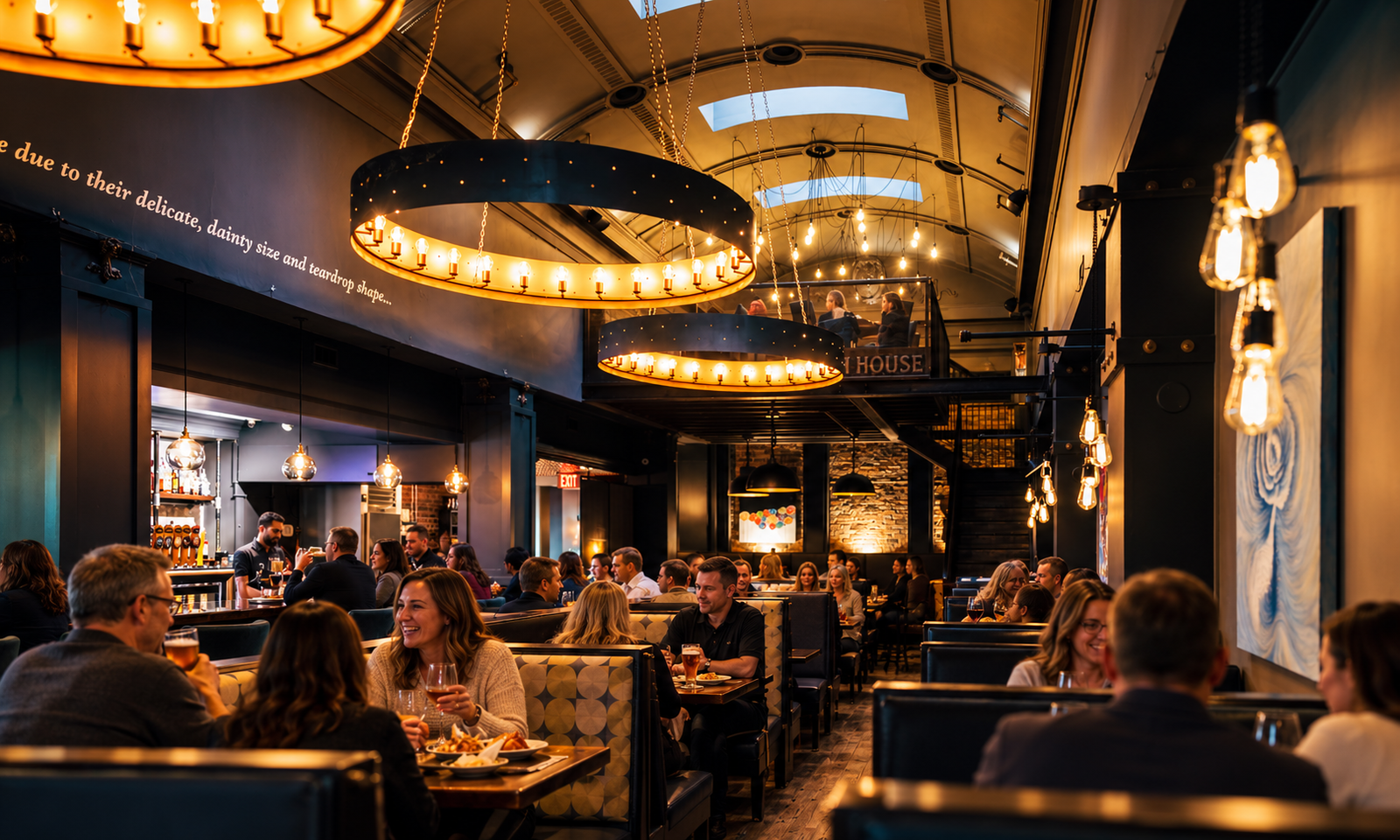
🍻 Gahan House Fredericton: The History Behind a Maritime Restaurant Favourite
🍁 The Rob Brown Realty JournalWednesday | Fredericton Spotlight
There are restaurants we visit because we're hungry.
And then there are restaurants we visit because they feel like part of our lives.
The place where you celebrated a birthday. Where you met friends after work. Where a casual Friday dinner turned into a three-hour conversation. Where you always seem to recognize someone, even when you weren't planning to see anybody.
Fredericton has plenty of places to eat. But some restaurants become something more interesting than a dining option.
They become part of how we experience the city.
And that raises a question worth discussing:
What makes a restaurant truly local? Is it who owns it, where its ingredients come from, the history behind it—or the memories people make there?
We talk about downtown restaurants as meeting spots. We recommend favourite lunch counters to newcomers. We develop weekend breakfast routines, celebrate special occasions over dinner and return to familiar tables when life gets busy.
Restaurants are businesses, of course. They need customers, good management and enough revenue to keep the doors open.
But they also serve a social purpose.
They're places where people can spend time together without hosting at home. They give us reasons to explore different parts of Fredericton. They introduce us to foods, cultures and traditions we might not otherwise encounter.
And when a restaurant becomes established, it can help shape how people think about an entire street or neighbourhood.
That's why the conversation about supporting local restaurants is bigger than choosing somewhere for supper.
It's about the kind of city we want to live in.
In the mid-1800s, Gahan was a prominent Charlottetown merchant who imported tea, wine and groceries. In 1880, he built a handsome brick residence on Sydney Street, close to his business.
That house would eventually have several lives, including use as a convent and boarding house, before becoming home to the Gahan House brewery and pub.
The brewing story began separately in 1997, when entrepreneur Kevin Murphy established Murphy's Brewing Company in Charlottetown.
As the brewery grew, it moved into the historic Gahan property and adopted the Gahan name in 2000. The original pub followed in 2001.
What began as a Prince Edward Island brewpub eventually crossed provincial boundaries.
Gahan House expanded to Halifax in 2014, Saint John in 2017 and Fredericton in 2018, before adding a Moncton location in 2019.
Today, Gahan House Riverside at 426 Queen Street brings that Maritime story into Fredericton's Historic Garrison District.
Its approach combines pub-style dining, handcrafted ales and a welcoming gathering space in the heart of downtown.
But there's an interesting twist to the story.
Gahan House is neither a Fredericton original nor a national chain. It's a regional restaurant brand with historic roots in another Maritime community.
Does that make it less local—or does it make it part of a larger Maritime identity that Fredericton shares?
That's a much more interesting conversation than simply deciding where to go for dinner.
It can connect a dining experience to a place, a person or a tradition that existed long before the current menu.
But history alone doesn't keep customers returning.
A restaurant has to create new reasons for people to visit.
For Gahan House, the combination of Maritime hospitality, food and craft beer is central to that experience.
For diners, the appeal might be the atmosphere, a familiar menu, a gathering with friends or the opportunity to try a beer with regional roots.
Someone celebrating a birthday might never think about the origins of the Gahan name.
Someone interested in Maritime brewing history might find that story part of the attraction.
Both are valid ways to experience the same restaurant.
The history gives a place its background. The people using it today give it a continuing story.
Each contributes differently.
A small independent restaurant might offer a distinctive menu and a direct relationship with its owner.
A regional restaurant group might bring recognizable concepts, established operations and additional dining choices.
A national chain might provide convenient hours, familiar food and employment for local residents.
It's tempting to sort restaurants into categories of good local and less local.
But that oversimplifies the choices people make.
A family looking for an affordable meal has different priorities from a couple celebrating an anniversary. Someone with dietary restrictions may choose based on menu options. A group of friends may care most about atmosphere, location or whether everyone can find something they enjoy.
And the people working in these restaurants—servers, cooks, bartenders, hosts and managers—are part of Fredericton's community regardless of where the company's head office is located.
Maybe the better question isn't simply whether a restaurant is locally owned.
Maybe it's what that restaurant adds to life here.
Dining out is a discretionary expense for many households, and restaurant operators face costs that customers don't always see.
Ingredients, wages, rent, utilities, equipment, insurance and countless other expenses influence what ends up on a menu.
Customers, meanwhile, are managing their own budgets.
When a meal costs more than it used to, people notice.
Some dine out less frequently. Some choose more affordable options. Others decide that a particular restaurant experience is worth saving for.
There's no single right answer.
But it creates a challenge for restaurants: How do you offer an experience people value while keeping it accessible enough that they'll return?
Good food matters.
So do service, consistency, atmosphere and the feeling that an evening out was worth the expense.
Restaurants that understand that balance have a better chance of becoming part of people's routines rather than an occasional novelty.
It might be convenient.
But would it be interesting?
Part of what makes a city enjoyable is having choices: somewhere casual for lunch, somewhere lively for friends, somewhere quieter for a conversation, somewhere adventurous when you want to try something new.
Those choices help create the personality of a place.
They also influence how people use the city after business hours.
A restaurant can bring activity to a street in the evening. It can encourage people to meet downtown rather than stay home. It can introduce visitors to the community and give residents another reason to spend time in their own city.
None of that means every restaurant will succeed, or that every concept will appeal to everyone.
A healthy restaurant scene changes.
New places open. Established favourites evolve. Some businesses close, leaving behind memories and making room for something different.
That can be difficult, especially when a restaurant has been part of someone's life for years.
But the ability to change is also part of what keeps a city's food culture interesting.
Schools, commuting distances, parks and property features are important.
But so are the everyday places that make living somewhere enjoyable.
For some people, being able to walk to restaurants is a major attraction.
Others prefer a quieter neighbourhood and don't mind driving downtown for dinner.
Some want a lively social scene nearby. Others are happiest knowing there's one dependable neighbourhood spot where they can meet friends.
Those preferences help shape what home means to different people.
And that's something a property's square footage can't fully capture.
A restaurant may not appear on a home's feature sheet, but it can still become part of the reason someone loves living in Fredericton.
It also reminds us that history, ownership, regional identity and personal experience aren't always the same thing.
Some restaurants earn our loyalty because they've been around for decades.
Others become favourites almost immediately.
Some tell a compelling story about where they came from.
Others are busy creating a story that future generations may look back on.
And that's what makes Fredericton's restaurant scene worth talking about.
A restaurant becomes meaningful not simply because it serves good food, but because people choose to make it part of their lives.
So here's a question for Fredericton:
Which local restaurant feels like part of your personal history—and what keeps you going back?
We'd love to hear about the familiar favourites, the unexpected discoveries and the places you think deserve more attention.
And if you're exploring a move to Fredericton, let's talk about more than houses. Let's talk about the neighbourhoods, restaurants and everyday experiences that will make this city feel like home. We're here to help you discover not just the right home, but the community around it!
There are restaurants we visit because we're hungry.
And then there are restaurants we visit because they feel like part of our lives.
The place where you celebrated a birthday. Where you met friends after work. Where a casual Friday dinner turned into a three-hour conversation. Where you always seem to recognize someone, even when you weren't planning to see anybody.
Fredericton has plenty of places to eat. But some restaurants become something more interesting than a dining option.
They become part of how we experience the city.
And that raises a question worth discussing:
What makes a restaurant truly local? Is it who owns it, where its ingredients come from, the history behind it—or the memories people make there?
🍽️ A City Tells Its Story Through Its Restaurants
Think about how often we describe a neighbourhood by the places we eat.We talk about downtown restaurants as meeting spots. We recommend favourite lunch counters to newcomers. We develop weekend breakfast routines, celebrate special occasions over dinner and return to familiar tables when life gets busy.
Restaurants are businesses, of course. They need customers, good management and enough revenue to keep the doors open.
But they also serve a social purpose.
They're places where people can spend time together without hosting at home. They give us reasons to explore different parts of Fredericton. They introduce us to foods, cultures and traditions we might not otherwise encounter.
And when a restaurant becomes established, it can help shape how people think about an entire street or neighbourhood.
That's why the conversation about supporting local restaurants is bigger than choosing somewhere for supper.
It's about the kind of city we want to live in.
🍺 Business Spotlight: Gahan House — From Charlottetown to Fredericton
Before Gahan House became a familiar name in Maritime dining, there was John Gahan.In the mid-1800s, Gahan was a prominent Charlottetown merchant who imported tea, wine and groceries. In 1880, he built a handsome brick residence on Sydney Street, close to his business.
That house would eventually have several lives, including use as a convent and boarding house, before becoming home to the Gahan House brewery and pub.
The brewing story began separately in 1997, when entrepreneur Kevin Murphy established Murphy's Brewing Company in Charlottetown.
As the brewery grew, it moved into the historic Gahan property and adopted the Gahan name in 2000. The original pub followed in 2001.
What began as a Prince Edward Island brewpub eventually crossed provincial boundaries.
Gahan House expanded to Halifax in 2014, Saint John in 2017 and Fredericton in 2018, before adding a Moncton location in 2019.
Today, Gahan House Riverside at 426 Queen Street brings that Maritime story into Fredericton's Historic Garrison District.
Its approach combines pub-style dining, handcrafted ales and a welcoming gathering space in the heart of downtown.
But there's an interesting twist to the story.
Gahan House is neither a Fredericton original nor a national chain. It's a regional restaurant brand with historic roots in another Maritime community.
Does that make it less local—or does it make it part of a larger Maritime identity that Fredericton shares?
That's a much more interesting conversation than simply deciding where to go for dinner.
🏛️ History Matters—But So Does What Happens Next
A historic name can give a restaurant character before anyone sits down.It can connect a dining experience to a place, a person or a tradition that existed long before the current menu.
But history alone doesn't keep customers returning.
A restaurant has to create new reasons for people to visit.
For Gahan House, the combination of Maritime hospitality, food and craft beer is central to that experience.
For diners, the appeal might be the atmosphere, a familiar menu, a gathering with friends or the opportunity to try a beer with regional roots.
Someone celebrating a birthday might never think about the origins of the Gahan name.
Someone interested in Maritime brewing history might find that story part of the attraction.
Both are valid ways to experience the same restaurant.
The history gives a place its background. The people using it today give it a continuing story.
🤝 The Local Restaurant Question Gets Complicated
Fredericton's restaurant scene includes independently owned establishments, family businesses, regional operators and national chains.Each contributes differently.
A small independent restaurant might offer a distinctive menu and a direct relationship with its owner.
A regional restaurant group might bring recognizable concepts, established operations and additional dining choices.
A national chain might provide convenient hours, familiar food and employment for local residents.
It's tempting to sort restaurants into categories of good local and less local.
But that oversimplifies the choices people make.
A family looking for an affordable meal has different priorities from a couple celebrating an anniversary. Someone with dietary restrictions may choose based on menu options. A group of friends may care most about atmosphere, location or whether everyone can find something they enjoy.
And the people working in these restaurants—servers, cooks, bartenders, hosts and managers—are part of Fredericton's community regardless of where the company's head office is located.
Maybe the better question isn't simply whether a restaurant is locally owned.
Maybe it's what that restaurant adds to life here.
💰 The Price of a Night Out
Here's where the conversation becomes particularly relevant.Dining out is a discretionary expense for many households, and restaurant operators face costs that customers don't always see.
Ingredients, wages, rent, utilities, equipment, insurance and countless other expenses influence what ends up on a menu.
Customers, meanwhile, are managing their own budgets.
When a meal costs more than it used to, people notice.
Some dine out less frequently. Some choose more affordable options. Others decide that a particular restaurant experience is worth saving for.
There's no single right answer.
But it creates a challenge for restaurants: How do you offer an experience people value while keeping it accessible enough that they'll return?
Good food matters.
So do service, consistency, atmosphere and the feeling that an evening out was worth the expense.
Restaurants that understand that balance have a better chance of becoming part of people's routines rather than an occasional novelty.
🌆 Why Restaurants Matter to Fredericton's Character
Imagine a downtown where every restaurant offered essentially the same experience.It might be convenient.
But would it be interesting?
Part of what makes a city enjoyable is having choices: somewhere casual for lunch, somewhere lively for friends, somewhere quieter for a conversation, somewhere adventurous when you want to try something new.
Those choices help create the personality of a place.
They also influence how people use the city after business hours.
A restaurant can bring activity to a street in the evening. It can encourage people to meet downtown rather than stay home. It can introduce visitors to the community and give residents another reason to spend time in their own city.
None of that means every restaurant will succeed, or that every concept will appeal to everyone.
A healthy restaurant scene changes.
New places open. Established favourites evolve. Some businesses close, leaving behind memories and making room for something different.
That can be difficult, especially when a restaurant has been part of someone's life for years.
But the ability to change is also part of what keeps a city's food culture interesting.
❤️ Living Fredericton: The Tables We Remember
As a REALTOR®, we spend a lot of time talking with people about what makes a neighbourhood appealing.Schools, commuting distances, parks and property features are important.
But so are the everyday places that make living somewhere enjoyable.
For some people, being able to walk to restaurants is a major attraction.
Others prefer a quieter neighbourhood and don't mind driving downtown for dinner.
Some want a lively social scene nearby. Others are happiest knowing there's one dependable neighbourhood spot where they can meet friends.
Those preferences help shape what home means to different people.
And that's something a property's square footage can't fully capture.
A restaurant may not appear on a home's feature sheet, but it can still become part of the reason someone loves living in Fredericton.
🌿 What's Your Kind of Local?
Gahan House's story reminds us that restaurants can have roots in one community and become part of the dining culture of another.It also reminds us that history, ownership, regional identity and personal experience aren't always the same thing.
Some restaurants earn our loyalty because they've been around for decades.
Others become favourites almost immediately.
Some tell a compelling story about where they came from.
Others are busy creating a story that future generations may look back on.
And that's what makes Fredericton's restaurant scene worth talking about.
A restaurant becomes meaningful not simply because it serves good food, but because people choose to make it part of their lives.
So here's a question for Fredericton:
Which local restaurant feels like part of your personal history—and what keeps you going back?
We'd love to hear about the familiar favourites, the unexpected discoveries and the places you think deserve more attention.
And if you're exploring a move to Fredericton, let's talk about more than houses. Let's talk about the neighbourhoods, restaurants and everyday experiences that will make this city feel like home. We're here to help you discover not just the right home, but the community around it!