🔎Home Buying in Fredericton: Why a Beautiful House Isn't Always Well Maintained
🍁 The Rob Brown Realty Journal
Tuesday | Fredericton Real Estate
There's a moment during almost every home search when a buyer walks through the front door and thinks, This could be the one.
The floors look beautiful. The kitchen has been updated. The lighting is just right. Someone has chosen the perfect paint colours, and the furniture makes every room feel like it belongs in a magazine.
It's easy to imagine living there.
And there's absolutely nothing wrong with that.
But here's the question I wish more buyers would ask before getting too attached:
What does this house look like when nobody's trying to impress you?
Because a beautifully presented home and a well-maintained home aren't necessarily the same thing.
And knowing the difference can save you a lot more than disappointment.
Presentation matters.
Fresh paint, clean floors, thoughtful decorating and an updated kitchen can make a home feel welcoming. They also help buyers understand how the space might work for them.
But those details don't tell us much about what has happened behind the walls, above the ceiling or beneath the foundation.
A house can have a gorgeous kitchen and an aging roof.
It can have new flooring and unresolved moisture problems.
It can have beautifully renovated bathrooms while the heating system has received little attention.
None of those combinations automatically means there's a serious problem. But they illustrate why appearances alone aren't enough.
Décor tells you how a home has been presented. Maintenance tells you how it has been cared for.
And the second story is often the more important one.
I like to encourage them to look up, too.
A roof is one of the home's most important protective systems, and replacing it can represent a significant expense.
That doesn't mean an older roof is automatically a bad roof. Materials, installation quality, weather exposure and maintenance all affect its condition.
But there are questions worth asking.
How old is the roof? Has it been repaired? Is there documentation of replacement? Have there been any leaks or ice-damming issues?
From the ground, buyers might notice missing or damaged shingles, unusual wear, sagging rooflines or drainage problems around the eaves.
Those are observations, not diagnoses. A qualified home inspector or roofing professional is better positioned to assess their significance.
And in New Brunswick, where roofs contend with snow, ice, wind and seasonal temperature changes, understanding their condition is especially worthwhile.
A new kitchen countertop is exciting.
A roof that's doing its job is considerably less glamorous—but arguably more important.
Water doesn't care how beautiful the living room is.
It follows gravity, finds openings and takes advantage of poor drainage.
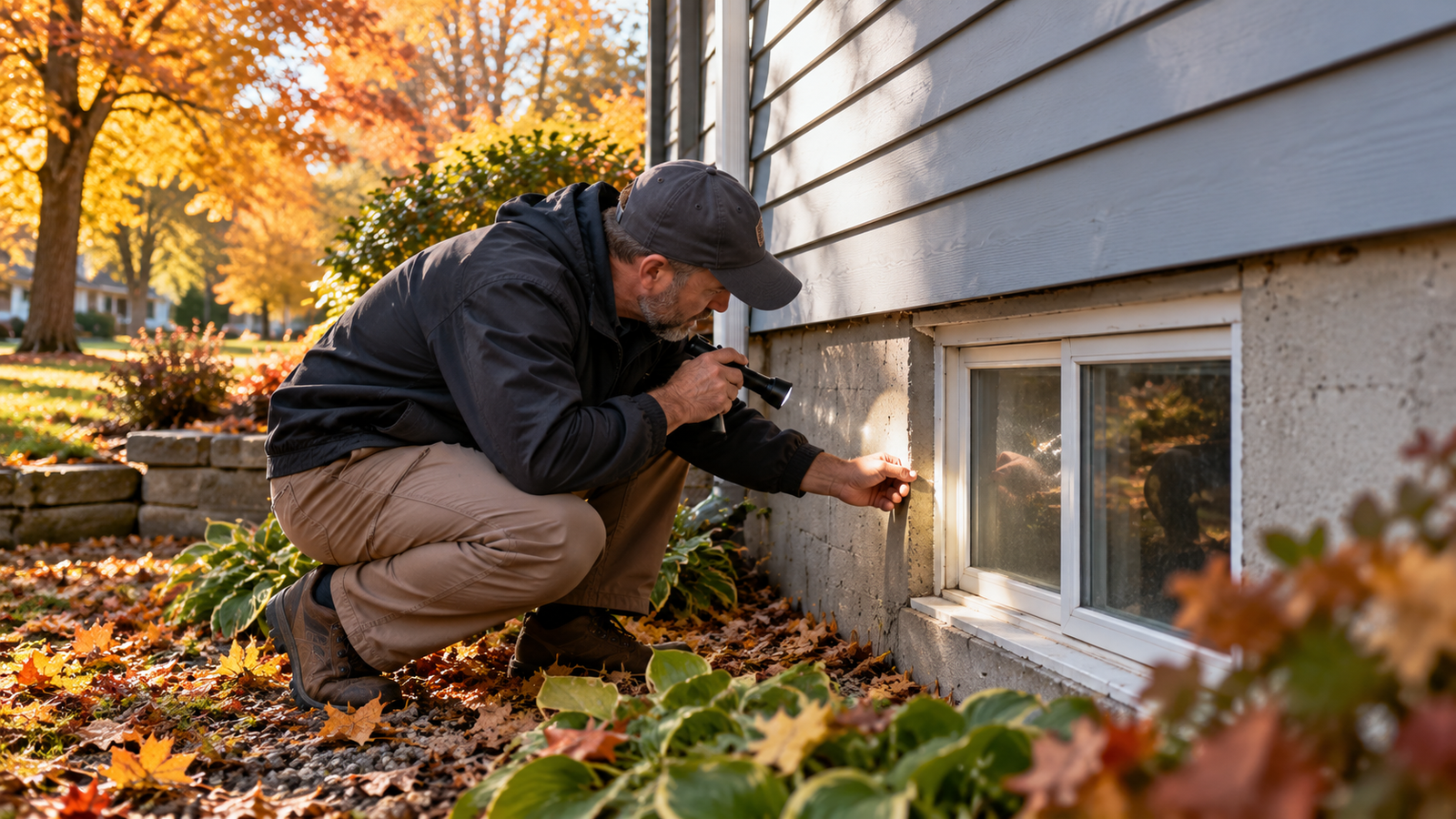
Start outside.
Does the ground generally slope away from the foundation, or does it appear to direct water toward the house?
Are gutters and downspouts present and in reasonable condition? Where does the water discharge?
Is there evidence of pooling near the foundation?
Then consider the basement.
Do you notice staining, dampness, unusual odours or signs of previous water intrusion?
A freshly finished basement can be a wonderful feature, but it can also make parts of the foundation and its history harder to observe.
That doesn't mean buyers should be suspicious of every renovated basement.
It means they should ask good questions.
Has water ever entered the basement? Were repairs completed? Is there a sump pump or other drainage system? Are records available?
In Fredericton and surrounding communities, seasonal snowmelt, heavy rainfall, soil conditions and individual lot grading can all influence moisture risk.
A dry-looking basement on showing day is encouraging. It isn't proof that the basement has always been dry.
Big windows? Wonderful.
Natural light? Even better.
But there's more to consider than the view.
How old are the windows? Do they open and close properly? Are there damaged seals, signs of moisture or deteriorating frames?
What about the installation and surrounding trim?
Condensation can have several causes, including indoor humidity, ventilation and window performance, so it's worth understanding the context rather than jumping to conclusions.
Windows can be expensive to replace, particularly when several need attention at once.
And in a climate like ours, their performance can influence comfort and heating costs.
A bright, beautiful room is a selling feature.
Knowing whether its windows are performing properly makes that feature even more valuable.
That means heating season is either underway or very close.
And while buyers often ask about heating costs, the conversation shouldn't end with the last electricity bill.
A home's heating system deserves a closer look.
What type of system is installed? How old is it? Has it been serviced regularly? Are there maintenance records?
Does the house rely on electric baseboards, a heat pump, a furnace, a boiler or a combination of systems?
Are there rooms that tend to feel colder than others?
A heat pump may be a valuable feature, but its age, installation, maintenance and cold-weather performance still matter.
Likewise, an older heating system isn't necessarily unreliable simply because it's older.
What matters is its actual condition and how well it has been maintained.
Buyers should also consider insulation, air sealing and ventilation, which can affect both comfort and operating costs.
And when comparing utility bills, remember that usage varies by household. The previous owner's costs are useful context, not a guarantee of what yours will be.
A home can look warm and inviting while still being expensive or difficult to heat.
That's worth knowing before moving day.
But the fixture itself tells us very little about the electrical system behind it.
Buyers should understand the home's electrical service, panel, wiring condition and any significant updates.
Were renovations completed with appropriate permits where required? Is there documentation of electrical work?
Are there visible signs that warrant further investigation, such as damaged outlets, exposed wiring or unusual modifications?
Older homes deserve particular attention, not because old automatically means unsafe, but because electrical systems and household demands have changed over time.
A home built decades ago may have been updated carefully and professionally.
Another may have accumulated additions and alterations that need review.
Electrical safety isn't something to determine by looking at a few outlets during a showing.
A qualified inspector can identify visible concerns, and a licensed electrician can assess issues requiring specialized evaluation.
It's one of those areas where a little due diligence can make a very big difference.
And understandably so.
But not every crack means a major structural problem.
Concrete and other building materials can develop cracks for several reasons, including shrinkage, settlement and movement.
The important questions involve the crack's location, width, pattern, history and whether it is changing.
Other observations might include uneven floors, doors that don't close properly, separation around openings or evidence of water intrusion.
Again, these are clues—not conclusions.
A home inspector can help determine whether additional assessment is warranted. Where structural concerns exist, a qualified structural engineer may be appropriate.
The goal isn't to turn every buyer into a foundation expert.
It's to help them recognize when they need one.
And that's a very different approach from assuming everything is fine because the basement has fresh paint.
A folder.
Not a glamorous feature, I know.
But a folder containing invoices, warranties, service records, permits and documentation of improvements can tell buyers a great deal about how a property has been managed.
Think about the difference between hearing:
“The roof was done a few years ago.”
And being able to review an invoice showing when the work was completed, what materials were used and who performed the installation.
Or between:
“The heat pump works great.”
And having records of installation and regular servicing.
Documentation doesn't guarantee that every job was completed perfectly. And a lack of paperwork doesn't automatically mean a home was neglected.
But good records help replace uncertainty with useful information.
They can also help buyers plan for future maintenance.
Because every house—new, old, renovated or original—will eventually need attention.
The question isn't whether a home will require maintenance.
It's whether you have a reasonable understanding of what that maintenance might involve.
A typical inspection is primarily a visual assessment of accessible systems and components at a particular point in time.
An inspector may identify visible deficiencies, safety concerns, signs of deterioration or areas requiring further investigation.
But an inspection generally cannot reveal everything concealed behind finished walls, beneath flooring or inside inaccessible spaces.
It also isn't a warranty against future problems.
Some concerns require specialists, such as electricians, plumbers, roofers, septic professionals or structural engineers.
And for rural properties around Fredericton, private wells and septic systems may call for separate testing or inspections.
The purpose of due diligence isn't to guarantee a house will never surprise you.
It's to make the decision with your eyes open.
Buyers should understand the inspection conditions in their purchase agreement, the applicable deadlines and what options are available if significant issues are discovered.
Every home has a story.
An older house may have been lovingly maintained for decades but still need modernization.
A newer home may have attractive finishes while certain installation or maintenance issues require attention.
And a property with a few known repairs might still represent excellent value if the buyer understands the costs and is comfortable taking them on.
The goal isn't to find a flawless house.
It's to understand the house you're buying.
Some buyers are comfortable with renovation projects and ongoing improvements.
Others need a home that requires relatively little immediate work.
Neither approach is wrong.
But a buyer who wants move-in-ready living needs to be especially careful not to confuse freshly decorated with mechanically sound.
Those are two different things.
Buying a home is emotional.
You're imagining family dinners, holidays, quiet mornings and the next chapter of your life.
Those feelings matter.
But so does knowing whether the roof needs replacing, how the basement handles spring runoff and what condition the heating system is in.
A good home-buying experience makes room for both.
Enjoy the beautiful kitchen.
Appreciate the natural light.
Picture where the furniture will go.
Then take the time to understand the building itself.
Because a home isn't just somewhere you live.
It's also a collection of systems, materials and components that need to work together through every New Brunswick season.
And knowing how those systems have been cared for is part of making a confident decision.
Before deciding whether you love the paint colours or the kitchen backsplash, ask yourself three questions:
What has been maintained? What might need attention? And what do I still need to know?
Those questions won't make the house any less exciting.
They'll help you understand what you're actually buying.
If you're preparing to purchase a home in Fredericton or the surrounding communities, I'd be happy to help you look beyond the listing photos, ask the right questions and build the appropriate inspections and due diligence into your buying process.
Because the best-looking house isn't always the best-maintained house—and the best purchase is the one you understand. We're here to help you see the whole picture before you make your next move!
There's a moment during almost every home search when a buyer walks through the front door and thinks, This could be the one.
The floors look beautiful. The kitchen has been updated. The lighting is just right. Someone has chosen the perfect paint colours, and the furniture makes every room feel like it belongs in a magazine.
It's easy to imagine living there.
And there's absolutely nothing wrong with that.
But here's the question I wish more buyers would ask before getting too attached:
What does this house look like when nobody's trying to impress you?
Because a beautifully presented home and a well-maintained home aren't necessarily the same thing.
And knowing the difference can save you a lot more than disappointment.
🏡 Pretty Is a Feeling. Maintenance Is a History.
Let's give credit where it's due.Presentation matters.
Fresh paint, clean floors, thoughtful decorating and an updated kitchen can make a home feel welcoming. They also help buyers understand how the space might work for them.
But those details don't tell us much about what has happened behind the walls, above the ceiling or beneath the foundation.
A house can have a gorgeous kitchen and an aging roof.
It can have new flooring and unresolved moisture problems.
It can have beautifully renovated bathrooms while the heating system has received little attention.
None of those combinations automatically means there's a serious problem. But they illustrate why appearances alone aren't enough.
Décor tells you how a home has been presented. Maintenance tells you how it has been cared for.
And the second story is often the more important one.
🏠 Start at the Top: The Roof
When buyers arrive at a showing, they're naturally drawn to the front entrance, landscaping and overall appearance.I like to encourage them to look up, too.
A roof is one of the home's most important protective systems, and replacing it can represent a significant expense.
That doesn't mean an older roof is automatically a bad roof. Materials, installation quality, weather exposure and maintenance all affect its condition.
But there are questions worth asking.
How old is the roof? Has it been repaired? Is there documentation of replacement? Have there been any leaks or ice-damming issues?
From the ground, buyers might notice missing or damaged shingles, unusual wear, sagging rooflines or drainage problems around the eaves.
Those are observations, not diagnoses. A qualified home inspector or roofing professional is better positioned to assess their significance.
And in New Brunswick, where roofs contend with snow, ice, wind and seasonal temperature changes, understanding their condition is especially worthwhile.
A new kitchen countertop is exciting.
A roof that's doing its job is considerably less glamorous—but arguably more important.
💧 Water: The Detail That Deserves Your Attention
If there's one thing I'd encourage buyers to pay particular attention to, it's how water moves around a property.Water doesn't care how beautiful the living room is.
It follows gravity, finds openings and takes advantage of poor drainage.
Start outside.
Does the ground generally slope away from the foundation, or does it appear to direct water toward the house?
Are gutters and downspouts present and in reasonable condition? Where does the water discharge?
Is there evidence of pooling near the foundation?
Then consider the basement.
Do you notice staining, dampness, unusual odours or signs of previous water intrusion?
A freshly finished basement can be a wonderful feature, but it can also make parts of the foundation and its history harder to observe.
That doesn't mean buyers should be suspicious of every renovated basement.
It means they should ask good questions.
Has water ever entered the basement? Were repairs completed? Is there a sump pump or other drainage system? Are records available?
In Fredericton and surrounding communities, seasonal snowmelt, heavy rainfall, soil conditions and individual lot grading can all influence moisture risk.
A dry-looking basement on showing day is encouraging. It isn't proof that the basement has always been dry.
🪟 Windows: More Than a Nice View
Windows are another feature buyers tend to judge by appearance.Big windows? Wonderful.
Natural light? Even better.
But there's more to consider than the view.
How old are the windows? Do they open and close properly? Are there damaged seals, signs of moisture or deteriorating frames?
What about the installation and surrounding trim?
Condensation can have several causes, including indoor humidity, ventilation and window performance, so it's worth understanding the context rather than jumping to conclusions.
Windows can be expensive to replace, particularly when several need attention at once.
And in a climate like ours, their performance can influence comfort and heating costs.
A bright, beautiful room is a selling feature.
Knowing whether its windows are performing properly makes that feature even more valuable.
🔥 Heating: Comfort Has a Cost
It's October in New Brunswick.That means heating season is either underway or very close.
And while buyers often ask about heating costs, the conversation shouldn't end with the last electricity bill.
A home's heating system deserves a closer look.
What type of system is installed? How old is it? Has it been serviced regularly? Are there maintenance records?
Does the house rely on electric baseboards, a heat pump, a furnace, a boiler or a combination of systems?
Are there rooms that tend to feel colder than others?
A heat pump may be a valuable feature, but its age, installation, maintenance and cold-weather performance still matter.
Likewise, an older heating system isn't necessarily unreliable simply because it's older.
What matters is its actual condition and how well it has been maintained.
Buyers should also consider insulation, air sealing and ventilation, which can affect both comfort and operating costs.
And when comparing utility bills, remember that usage varies by household. The previous owner's costs are useful context, not a guarantee of what yours will be.
A home can look warm and inviting while still being expensive or difficult to heat.
That's worth knowing before moving day.
⚡ Electrical: The Work You Usually Can't See
A beautiful light fixture can make a room feel completely transformed.But the fixture itself tells us very little about the electrical system behind it.
Buyers should understand the home's electrical service, panel, wiring condition and any significant updates.
Were renovations completed with appropriate permits where required? Is there documentation of electrical work?
Are there visible signs that warrant further investigation, such as damaged outlets, exposed wiring or unusual modifications?
Older homes deserve particular attention, not because old automatically means unsafe, but because electrical systems and household demands have changed over time.
A home built decades ago may have been updated carefully and professionally.
Another may have accumulated additions and alterations that need review.
Electrical safety isn't something to determine by looking at a few outlets during a showing.
A qualified inspector can identify visible concerns, and a licensed electrician can assess issues requiring specialized evaluation.
It's one of those areas where a little due diligence can make a very big difference.
🧱 Foundations: Look for Clues, Not Conclusions
Cracks are one of the quickest ways to make a buyer nervous.And understandably so.
But not every crack means a major structural problem.
Concrete and other building materials can develop cracks for several reasons, including shrinkage, settlement and movement.
The important questions involve the crack's location, width, pattern, history and whether it is changing.
Other observations might include uneven floors, doors that don't close properly, separation around openings or evidence of water intrusion.
Again, these are clues—not conclusions.
A home inspector can help determine whether additional assessment is warranted. Where structural concerns exist, a qualified structural engineer may be appropriate.
The goal isn't to turn every buyer into a foundation expert.
It's to help them recognize when they need one.
And that's a very different approach from assuming everything is fine because the basement has fresh paint.
📋 The Most Underrated Feature: A Maintenance Record
Here's something that rarely makes it into the listing headline.A folder.
Not a glamorous feature, I know.
But a folder containing invoices, warranties, service records, permits and documentation of improvements can tell buyers a great deal about how a property has been managed.
Think about the difference between hearing:
“The roof was done a few years ago.”
And being able to review an invoice showing when the work was completed, what materials were used and who performed the installation.
Or between:
“The heat pump works great.”
And having records of installation and regular servicing.
Documentation doesn't guarantee that every job was completed perfectly. And a lack of paperwork doesn't automatically mean a home was neglected.
But good records help replace uncertainty with useful information.
They can also help buyers plan for future maintenance.
Because every house—new, old, renovated or original—will eventually need attention.
The question isn't whether a home will require maintenance.
It's whether you have a reasonable understanding of what that maintenance might involve.
🔍 What a Home Inspection Can—and Can't—Tell You
A professional home inspection is an important part of the buying process, but it's worth understanding its limitations.A typical inspection is primarily a visual assessment of accessible systems and components at a particular point in time.
An inspector may identify visible deficiencies, safety concerns, signs of deterioration or areas requiring further investigation.
But an inspection generally cannot reveal everything concealed behind finished walls, beneath flooring or inside inaccessible spaces.
It also isn't a warranty against future problems.
Some concerns require specialists, such as electricians, plumbers, roofers, septic professionals or structural engineers.
And for rural properties around Fredericton, private wells and septic systems may call for separate testing or inspections.
The purpose of due diligence isn't to guarantee a house will never surprise you.
It's to make the decision with your eyes open.
Buyers should understand the inspection conditions in their purchase agreement, the applicable deadlines and what options are available if significant issues are discovered.
⚖️ A House Doesn't Have to Be Perfect to Be a Good Buy
This is where the inspection mindset becomes especially useful.Every home has a story.
An older house may have been lovingly maintained for decades but still need modernization.
A newer home may have attractive finishes while certain installation or maintenance issues require attention.
And a property with a few known repairs might still represent excellent value if the buyer understands the costs and is comfortable taking them on.
The goal isn't to find a flawless house.
It's to understand the house you're buying.
Some buyers are comfortable with renovation projects and ongoing improvements.
Others need a home that requires relatively little immediate work.
Neither approach is wrong.
But a buyer who wants move-in-ready living needs to be especially careful not to confuse freshly decorated with mechanically sound.
Those are two different things.
❤️ The Real Estate Reality: Fall in Love, Then Ask Questions
I understand why buyers get excited about a beautiful property.Buying a home is emotional.
You're imagining family dinners, holidays, quiet mornings and the next chapter of your life.
Those feelings matter.
But so does knowing whether the roof needs replacing, how the basement handles spring runoff and what condition the heating system is in.
A good home-buying experience makes room for both.
Enjoy the beautiful kitchen.
Appreciate the natural light.
Picture where the furniture will go.
Then take the time to understand the building itself.
Because a home isn't just somewhere you live.
It's also a collection of systems, materials and components that need to work together through every New Brunswick season.
And knowing how those systems have been cared for is part of making a confident decision.
🌿 Looking Beyond the First Impression...
The next time you tour a home, try a small experiment.Before deciding whether you love the paint colours or the kitchen backsplash, ask yourself three questions:
What has been maintained? What might need attention? And what do I still need to know?
Those questions won't make the house any less exciting.
They'll help you understand what you're actually buying.
If you're preparing to purchase a home in Fredericton or the surrounding communities, I'd be happy to help you look beyond the listing photos, ask the right questions and build the appropriate inspections and due diligence into your buying process.
Because the best-looking house isn't always the best-maintained house—and the best purchase is the one you understand. We're here to help you see the whole picture before you make your next move!