☕ Fredericton Coffee Shops: Why Independent Cafés Matter to Our City
🍁 The Rob Brown Realty JournalWednesday | Fredericton Conversation
There's a particular kind of meeting that happens in Fredericton without anyone calling it a meeting.
Two people sit down with coffees and end up talking for an hour. A university student spreads out notes beside a laptop. Someone between appointments answers a few emails. At another table, a first date is going well enough that neither person seems particularly interested in leaving.
The coffee matters, of course.
But it isn't really the whole story.
Across Fredericton, independent coffee shops have become something surprisingly important: informal offices, neighbourhood gathering places, study spaces, creative meeting rooms and familiar stops in the middle of otherwise busy days.
And they help answer a question that doesn't always come up when we talk about what makes a city livable.
Where do people go when they want to be somewhere, but don't necessarily have anywhere they need to be?
Your first place is home. Your second is work. A third place is somewhere you can spend time outside both.
It might be a café, a library, a pub, a park or a neighbourhood gathering space.
What makes it valuable isn't necessarily what you buy there. It's the opportunity to be around other people without needing a formal reason.
Coffee shops are particularly good at this.
They offer just enough structure to make being there feel natural. You order something, find a seat and settle in.
Nobody needs to organize an event.
And in a city the size of Fredericton, that casual accessibility matters.
A coffee shop can be where you unexpectedly run into a former coworker, reconnect with an old friend or begin recognizing someone you see every Thursday morning.
Those small interactions might not seem significant individually.
But collectively, they're part of how a city develops a sense of familiarity.
Its menu features Whitney Coffee, craft espresso, teas, hot sandwiches and house-baked treats. But the more interesting part of Nomad's approach is the space itself.
The café welcomes morning coffee stops, afternoon conversations and evening study sessions. It also offers space for workshops, community meetups and private gatherings.
That's particularly meaningful in a city with a substantial student population and an evolving mix of downtown residents, workers and visitors.
Not everyone wants to meet in a restaurant or a bar. Sometimes people want a comfortable place for coffee after dinner, a quiet conversation or a couple of hours with a notebook.
Nomad's approach recognizes that coffee shops can serve different purposes throughout the day.
And that flexibility is part of what makes a neighbourhood gathering place valuable.
Between the University of New Brunswick, St. Thomas University and New Brunswick Community College, students are an important part of the community's everyday rhythm.
And while libraries remain essential study spaces, coffee shops offer something different.
A change of scenery.
A little background noise.
The possibility of taking a break without leaving the building.
For some students, a café table becomes a temporary desk during exam season. For others, it's where group projects get organized or difficult assignments finally start making sense.
And those habits can last beyond graduation.
Someone who discovered a favourite coffee shop while attending university might return years later as a working professional, a parent or a visitor coming back to Fredericton.
That's one way businesses become connected to the different chapters of people's lives.
Not everyone spends Monday through Friday sitting at the same desk in the same building.
Some people work remotely. Others are self-employed, travel between appointments or need a neutral place to meet a client.
Coffee shops have quietly become part of that working landscape.
A table, a laptop and a decent internet connection can turn an ordinary morning into a productive one.
Of course, there's an important balance here.
Independent cafés are businesses with rent, staffing and operating costs. A customer occupying a table for hours after buying one coffee can create challenges, especially during busy periods.
Being a good regular means recognizing that relationship.
Order appropriately. Respect busy times. Follow the café's seating and laptop policies. Make room when space is limited.
The best third places work because customers and businesses both understand their part in keeping them welcoming.
Consider a few familiar local names.
The Tipsy Muse Café has built a recognizable identity around coffee and the arts. Its connection to live performances and creative gatherings gives it a character that extends beyond the counter.
Two people sit down with coffees and end up talking for an hour. A university student spreads out notes beside a laptop. Someone between appointments answers a few emails. At another table, a first date is going well enough that neither person seems particularly interested in leaving.
The coffee matters, of course.
But it isn't really the whole story.
Across Fredericton, independent coffee shops have become something surprisingly important: informal offices, neighbourhood gathering places, study spaces, creative meeting rooms and familiar stops in the middle of otherwise busy days.
And they help answer a question that doesn't always come up when we talk about what makes a city livable.
Where do people go when they want to be somewhere, but don't necessarily have anywhere they need to be?
🏙️ The City's Unofficial Living Rooms
There's a term for places like these: third places.Your first place is home. Your second is work. A third place is somewhere you can spend time outside both.
It might be a café, a library, a pub, a park or a neighbourhood gathering space.
What makes it valuable isn't necessarily what you buy there. It's the opportunity to be around other people without needing a formal reason.
Coffee shops are particularly good at this.
They offer just enough structure to make being there feel natural. You order something, find a seat and settle in.
Nobody needs to organize an event.
And in a city the size of Fredericton, that casual accessibility matters.
A coffee shop can be where you unexpectedly run into a former coworker, reconnect with an old friend or begin recognizing someone you see every Thursday morning.
Those small interactions might not seem significant individually.
But collectively, they're part of how a city develops a sense of familiarity.
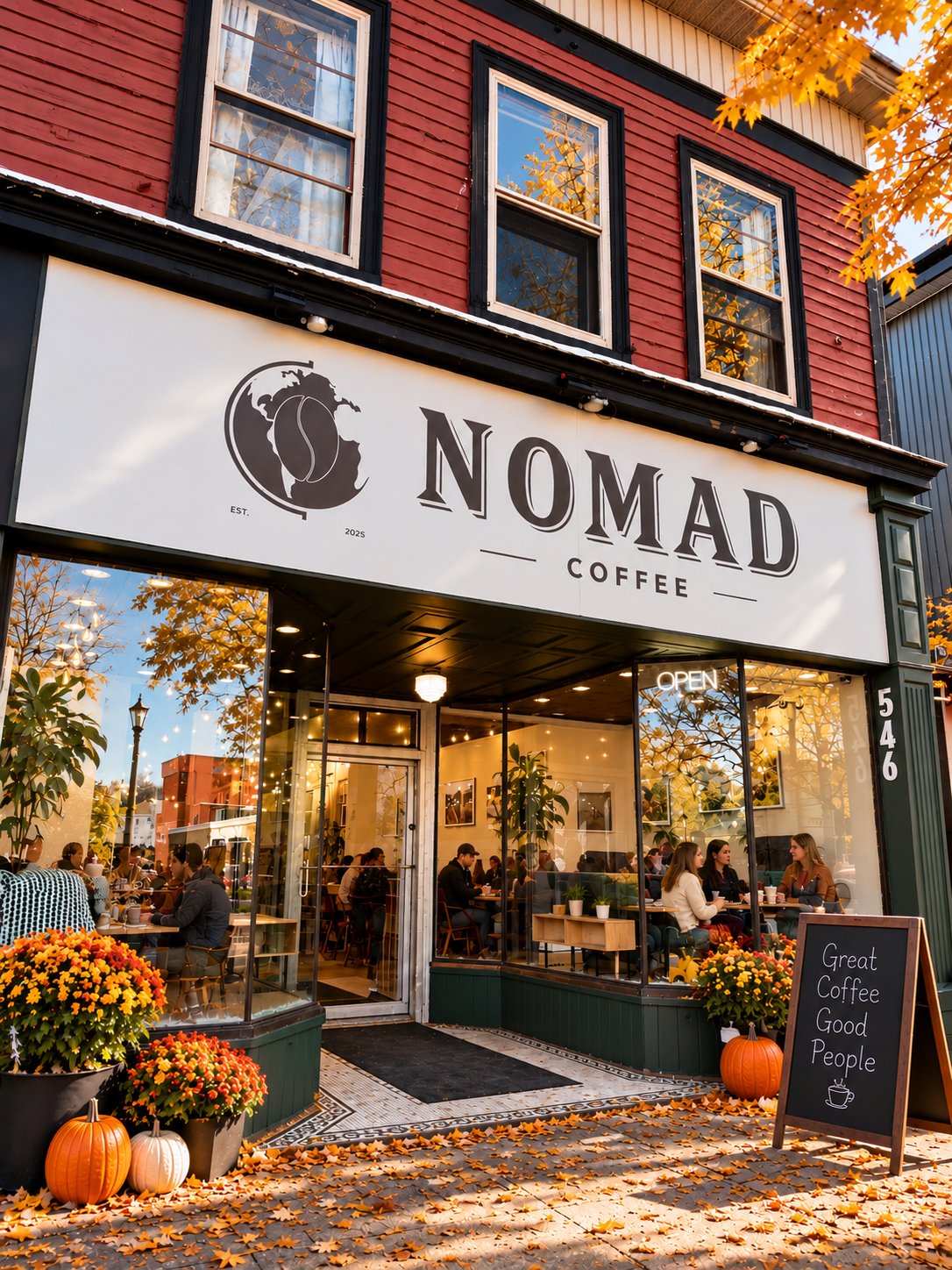
☕ Business Spotlight: Nomad - A Place to Stay a While
At 546 Queen Street, Nomad Coffee offers something that downtown Fredericton can always use more of: another welcoming place to gather.Its menu features Whitney Coffee, craft espresso, teas, hot sandwiches and house-baked treats. But the more interesting part of Nomad's approach is the space itself.
The café welcomes morning coffee stops, afternoon conversations and evening study sessions. It also offers space for workshops, community meetups and private gatherings.
That's particularly meaningful in a city with a substantial student population and an evolving mix of downtown residents, workers and visitors.
Not everyone wants to meet in a restaurant or a bar. Sometimes people want a comfortable place for coffee after dinner, a quiet conversation or a couple of hours with a notebook.
Nomad's approach recognizes that coffee shops can serve different purposes throughout the day.
And that flexibility is part of what makes a neighbourhood gathering place valuable.
The coffee gets people through the door. The opportunity to connect gives them a reason to stay.
📚 The Study Session That Becomes a Routine
Fredericton is a university city.Between the University of New Brunswick, St. Thomas University and New Brunswick Community College, students are an important part of the community's everyday rhythm.
And while libraries remain essential study spaces, coffee shops offer something different.
A change of scenery.
A little background noise.
The possibility of taking a break without leaving the building.
For some students, a café table becomes a temporary desk during exam season. For others, it's where group projects get organized or difficult assignments finally start making sense.
And those habits can last beyond graduation.
Someone who discovered a favourite coffee shop while attending university might return years later as a working professional, a parent or a visitor coming back to Fredericton.
That's one way businesses become connected to the different chapters of people's lives.
💻 The Office Without an Office
The traditional workplace has changed.Not everyone spends Monday through Friday sitting at the same desk in the same building.
Some people work remotely. Others are self-employed, travel between appointments or need a neutral place to meet a client.
Coffee shops have quietly become part of that working landscape.
A table, a laptop and a decent internet connection can turn an ordinary morning into a productive one.
Of course, there's an important balance here.
Independent cafés are businesses with rent, staffing and operating costs. A customer occupying a table for hours after buying one coffee can create challenges, especially during busy periods.
Being a good regular means recognizing that relationship.
Order appropriately. Respect busy times. Follow the café's seating and laptop policies. Make room when space is limited.
The best third places work because customers and businesses both understand their part in keeping them welcoming.
🥐 Different Cafés, Different Personalities
One of the best things about Fredericton's independent coffee scene is that the cafés don't all feel interchangeable.Consider a few familiar local names.
The Tipsy Muse Café has built a recognizable identity around coffee and the arts. Its connection to live performances and creative gatherings gives it a character that extends beyond the counter.
Neighbourly Coffee brings its own welcoming personality to Fredericton's independent café scene, offering another inviting spot to enjoy a coffee, catch up with friends and feel connected to the community.
The Coffee Mill represents another side of Fredericton's café culture: the familiar local stop, where coffee, food and everyday routines intersect.
And Nomad contributes the specialty-roasting perspective, giving coffee itself a stronger role in the conversation.
These aren't businesses that need to be ranked against one another.
Their differences are the point.
One might suit a creative afternoon. Another might be where you meet someone for breakfast. Another becomes your reliable stop on the way to work.
A healthy local coffee culture has room for all of those experiences.
“Want to grab a coffee?”
It's one of the simplest invitations we have.
Less formal than dinner. Easier to fit into a busy schedule. Comfortable enough for two people who are still getting to know one another.
Coffee shops also make useful meeting places for people who already know each other well.
Friends catching up after months apart. Parents taking a break between errands. Colleagues discussing an idea that isn't quite ready for a conference room.
And then there are the regulars.
The people who come in at roughly the same time, order something familiar and gradually become part of the atmosphere.
A café doesn't need to know everyone's name to create that sense of belonging.
Sometimes it's enough to recognize the room, the faces and the rhythm.
Those are important practical considerations.
But there's another question worth asking:
What will everyday life feel like once you're living there?
Can you walk somewhere for a coffee?
Is there a comfortable place nearby to meet a friend?
Does the neighbourhood have independent businesses that give it a distinctive character?
These things aren't substitutes for affordability, infrastructure or essential services.
But they influence how people experience a neighbourhood.
A good café can make a commercial street feel more welcoming. It can encourage people to spend time in an area rather than simply pass through it.
It can also support a wider network of local producers, bakers, artists and other small businesses.
And in Fredericton, where neighbourhood character varies considerably between downtown, the northside and surrounding communities, those everyday destinations help shape how each area feels.
We count new construction, population growth, employment and business investment.
Those numbers matter.
But they don't tell us whether people enjoy spending time in the places we've built.
A busy coffee shop offers a different kind of evidence.
People are choosing to stay.
They're talking, working, reading, laughing, thinking or simply taking a break.
They're participating in city life without attending a major event or making a significant purchase.
And perhaps that's one of the most overlooked contributions independent cafés make.
They give ordinary days somewhere to happen.
Not just what's being served, but how the space is being used.
The quiet conversation. The person working through a notebook. The friends who clearly haven't seen each other in a while.
These are small scenes, but they're part of the city's larger story.
And supporting the independent businesses that make them possible helps preserve something worth having.
So, where's your Fredericton coffee spot?
The one you recommend to newcomers, take visiting friends to, or visit so regularly that it feels like part of your routine?
We'd love to hear which local café has earned a place in your everyday life.
Because when we talk about finding the right neighbourhood—or the right place to call home—sometimes the most revealing details are the places we return to without thinking twice.
The Coffee Mill represents another side of Fredericton's café culture: the familiar local stop, where coffee, food and everyday routines intersect.
And Nomad contributes the specialty-roasting perspective, giving coffee itself a stronger role in the conversation.
These aren't businesses that need to be ranked against one another.
Their differences are the point.
One might suit a creative afternoon. Another might be where you meet someone for breakfast. Another becomes your reliable stop on the way to work.
A healthy local coffee culture has room for all of those experiences.
❤️ First Dates, Familiar Faces and Ordinary Tuesdays
Think about how often coffee appears in the early stages of a relationship.“Want to grab a coffee?”
It's one of the simplest invitations we have.
Less formal than dinner. Easier to fit into a busy schedule. Comfortable enough for two people who are still getting to know one another.
Coffee shops also make useful meeting places for people who already know each other well.
Friends catching up after months apart. Parents taking a break between errands. Colleagues discussing an idea that isn't quite ready for a conference room.
And then there are the regulars.
The people who come in at roughly the same time, order something familiar and gradually become part of the atmosphere.
A café doesn't need to know everyone's name to create that sense of belonging.
Sometimes it's enough to recognize the room, the faces and the rhythm.
🏡 Why Coffee Shops Matter to Neighbourhoods
When someone is considering moving to Fredericton, it's natural to focus on housing prices, schools, commute times and property features.Those are important practical considerations.
But there's another question worth asking:
What will everyday life feel like once you're living there?
Can you walk somewhere for a coffee?
Is there a comfortable place nearby to meet a friend?
Does the neighbourhood have independent businesses that give it a distinctive character?
These things aren't substitutes for affordability, infrastructure or essential services.
But they influence how people experience a neighbourhood.
A good café can make a commercial street feel more welcoming. It can encourage people to spend time in an area rather than simply pass through it.
It can also support a wider network of local producers, bakers, artists and other small businesses.
And in Fredericton, where neighbourhood character varies considerably between downtown, the northside and surrounding communities, those everyday destinations help shape how each area feels.
🌿 The Value of Staying a Little Longer
There's something interesting about the way we measure a city's success.We count new construction, population growth, employment and business investment.
Those numbers matter.
But they don't tell us whether people enjoy spending time in the places we've built.
A busy coffee shop offers a different kind of evidence.
People are choosing to stay.
They're talking, working, reading, laughing, thinking or simply taking a break.
They're participating in city life without attending a major event or making a significant purchase.
And perhaps that's one of the most overlooked contributions independent cafés make.
They give ordinary days somewhere to happen.
☕ Your Usual Spot...
The next time you stop for coffee in Fredericton, take a moment to notice what's happening around you.Not just what's being served, but how the space is being used.
The quiet conversation. The person working through a notebook. The friends who clearly haven't seen each other in a while.
These are small scenes, but they're part of the city's larger story.
And supporting the independent businesses that make them possible helps preserve something worth having.
So, where's your Fredericton coffee spot?
The one you recommend to newcomers, take visiting friends to, or visit so regularly that it feels like part of your routine?
We'd love to hear which local café has earned a place in your everyday life.
Because when we talk about finding the right neighbourhood—or the right place to call home—sometimes the most revealing details are the places we return to without thinking twice.