🍁 Isaac’s Way Fredericton: How a Restaurant Becomes a City Landmark
🍁 The Rob Brown Realty JournalMonday | Fredericton History
Some restaurants are places you go to eat.
Others become places you use to explain your city.
You recommend them to visitors. You suggest them when someone asks where to meet. You remember the table where you celebrated something, the server who made everyone laugh, or the painting you kept looking at throughout dinner.
Eventually, the restaurant becomes more than a business on a street.
It becomes part of the city's personality.
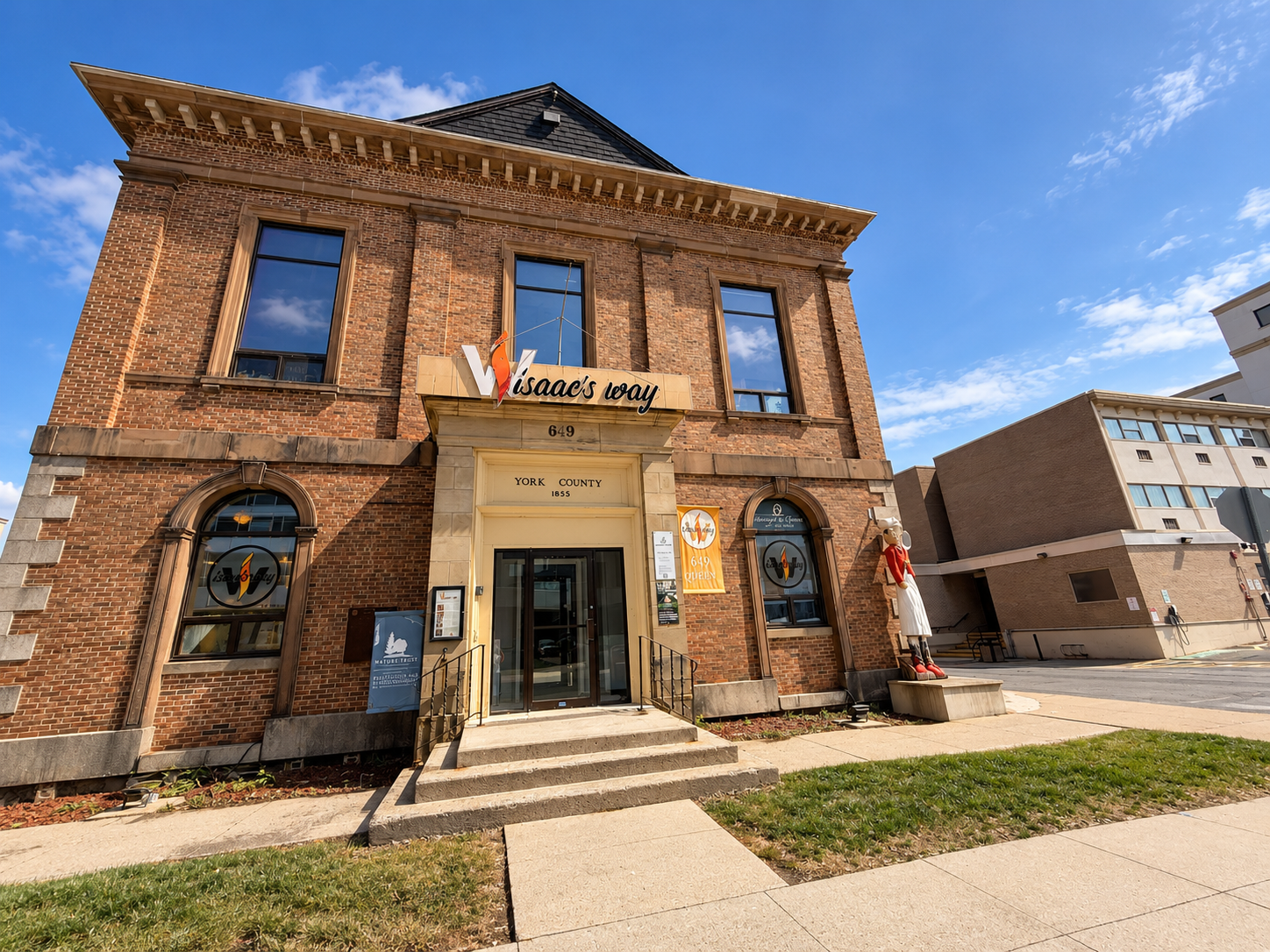
In downtown Fredericton, Isaac’s Way offers a particularly interesting example of how that happens.
Because the story of Isaac’s Way isn't just about what's coming out of the kitchen. It's about an old courthouse, a restaurant that survived a fire, employees who became owners, local artists whose work fills the walls, and a commitment to giving back that has lasted for years.
And somewhere along the way, it became a place people identify with.
The restaurant occupies the historic York County Courthouse, dating to approximately 1855.
It's worth making that distinction. While the old York County Jail is another important piece of Fredericton's history, Isaac’s Way is located in the former courthouse, not the jail.
There's something wonderfully fitting about what the courthouse has become.
A building once associated with formal proceedings and the administration of justice now welcomes friends meeting for lunch, families celebrating birthdays, and people catching up over coffee.
The building hasn't lost its history. It has simply found another way to be useful to the city.
That's one of the more interesting things about downtown Fredericton. Some of its most memorable spaces are buildings that have been given new purposes without losing their connection to the past.
Isaac’s Way is a reminder that preserving an old building doesn't have to mean freezing it in time.
Sometimes the best way to keep history alive is to fill it with people.
It opened in November 2005 on Carleton Street, founded by Tina and Jason LeJeune, who wanted to build a restaurant with a strong connection to its community.
Then, in October 2012, a devastating fire destroyed the original restaurant.
For many independent businesses, a loss like that could be the end of the story.
But Isaac’s Way continued, eventually making its home in the historic courthouse on Queen Street.
The address changed. The building changed. The restaurant's commitment to community did not.
And that continuity matters.
A restaurant becomes part of a city not because nothing ever changes, but because people continue to recognize what makes it special even when circumstances do change.
It's part of the restaurant's identity.
The walls showcase paintings donated by New Brunswick artists, available through ongoing silent auctions. The money raised helps children from families facing financial barriers participate in art, music, dance and theatre lessons.
According to the restaurant's current art auction information, the program has raised more than $382,000 since 2007.
That's a remarkable contribution from a restaurant whose primary business is serving food.
And consider what makes the idea so effective.
A customer comes in for dinner and notices a painting. They ask about the artist. Maybe they place a bid. Perhaps they return to see whether someone has outbid them.
Meanwhile, a local artist gets exposure, a child gets an opportunity to explore the arts, and the restaurant becomes a meeting point for people who might not otherwise cross paths.
The walls change. The conversation changes. The connection continues.
It's a gallery, a fundraiser and a dining room all at once.
That's the difference between displaying local art and becoming part of the local arts community.
In December 2018, founders Tina and Jason LeJeune sold the business to pursue other interests.
Rather than passing into the hands of an unrelated restaurant group, operations were taken over by four longtime staff members who had helped build the business.
Today, Tabatha Smith and Chef Laurie Richard lead Isaac’s Way, continuing the traditions that made it recognizable in the first place.
It's a compelling example of how much a restaurant's identity can depend on the people working inside it.
Menus evolve. Décor changes. Buildings get renovated.
But the people who greet customers, prepare meals, remember familiar faces and keep a place running are often the ones who give it continuity.
Think about your own favourite restaurant.
There's a good chance that at least one of the reasons you return has nothing to do with the menu.
Isaac’s Way emphasizes cooking from scratch and using regional ingredients, including New Brunswick meats, Atlantic seafood, seasonal vegetables and local craft beverages.
Even the restaurant's coffee mugs are made in New Brunswick.
It's a small detail, but a telling one.
Supporting local producers isn't just a slogan when it becomes part of everyday purchasing decisions.
And for diners, those choices help create a sense of place.
A meal in Fredericton should be able to feel like a meal in Fredericton—not an interchangeable experience that could happen in any city.
That doesn't mean every dish needs to be a traditional Maritime recipe.
It means the restaurant recognizes the community and region around it.
The restaurant also describes an ongoing commitment to providing food to the Wilmot United Church Saturday Evening Drop-In Centre, supporting people who need a meal.
It's the sort of work that may never appear on a dinner receipt, but it helps explain why some businesses develop a deeper relationship with their communities.
They're not only places where money changes hands.
They contribute time, food, resources, visibility and care.
And over the years, those choices become part of what people associate with the business.
Not every restaurant needs to run a major fundraising initiative to matter to its neighbourhood. Sometimes community involvement is as simple as supporting a local team, giving an emerging artist a place to perform, or making someone feel welcome on an otherwise difficult day.
The important thing is that the relationship runs both ways.
The community supports the restaurant.
The restaurant supports the community.
A popular destination is somewhere people want to visit.
A landmark is somewhere people feel belongs to the city.
The distinction isn't necessarily about age, size or architectural importance.
It's about accumulated experiences.
The birthday dinners. The conversations after work. The family visits. The regular lunch dates. The first-time visitors who return on their next trip.
And, perhaps most importantly, the ordinary meals nobody thinks to photograph.
Those are the moments that make a place familiar.
For Isaac’s Way, the combination of a historic building, community-minded ownership, local food, changing artwork and a broad mix of customers gives the restaurant an identity that extends beyond its menu.
Its location adds another layer.
A short walk connects it to the Beaverbrook Art Gallery, the Playhouse, the riverfront and other familiar downtown destinations.
That makes it part of the larger experience of spending time in Fredericton.
Not just somewhere to eat, but somewhere that fits naturally into a day in the city.
Those things matter.
But a list of amenities doesn't fully explain why people feel attached to a place.
There's a difference between having a restaurant nearby and having a restaurant you feel connected to.
One is convenient.
The other becomes part of your routine, your memories and your sense of belonging.
Businesses like Isaac’s Way help give Fredericton that sense of identity.
They make the downtown more than a collection of buildings. They create reasons for people to gather, stay a little longer, support one another and return.
And that's something no neighbourhood map can quite capture.
Notice the art. Think about the history of the building. Consider how many different conversations have happened inside those walls.
And perhaps ask yourself a question:
Which Fredericton restaurant has become part of your own story?
Maybe it's where your family always celebrates. Maybe it's where the staff know your order. Or maybe it's a place you haven't visited in years but still think of whenever someone mentions the city.
Those are the places worth appreciating—and supporting.
Because a great restaurant can serve a memorable meal.
A truly special one becomes part of the place we call home.
Some restaurants are places you go to eat.
Others become places you use to explain your city.
You recommend them to visitors. You suggest them when someone asks where to meet. You remember the table where you celebrated something, the server who made everyone laugh, or the painting you kept looking at throughout dinner.
Eventually, the restaurant becomes more than a business on a street.
It becomes part of the city's personality.
In downtown Fredericton, Isaac’s Way offers a particularly interesting example of how that happens.
Because the story of Isaac’s Way isn't just about what's coming out of the kitchen. It's about an old courthouse, a restaurant that survived a fire, employees who became owners, local artists whose work fills the walls, and a commitment to giving back that has lasted for years.
And somewhere along the way, it became a place people identify with.
🏛️ A Courthouse With a Second Life
Walk into Isaac’s Way at 649 Queen Street, and you're entering a building with a story that began long before anyone was ordering lunch.The restaurant occupies the historic York County Courthouse, dating to approximately 1855.
It's worth making that distinction. While the old York County Jail is another important piece of Fredericton's history, Isaac’s Way is located in the former courthouse, not the jail.
There's something wonderfully fitting about what the courthouse has become.
A building once associated with formal proceedings and the administration of justice now welcomes friends meeting for lunch, families celebrating birthdays, and people catching up over coffee.
The building hasn't lost its history. It has simply found another way to be useful to the city.
That's one of the more interesting things about downtown Fredericton. Some of its most memorable spaces are buildings that have been given new purposes without losing their connection to the past.
Isaac’s Way is a reminder that preserving an old building doesn't have to mean freezing it in time.
Sometimes the best way to keep history alive is to fill it with people.
🔥 The Restaurant That Refused to Disappear
Isaac’s Way didn't begin on Queen Street.It opened in November 2005 on Carleton Street, founded by Tina and Jason LeJeune, who wanted to build a restaurant with a strong connection to its community.
Then, in October 2012, a devastating fire destroyed the original restaurant.
For many independent businesses, a loss like that could be the end of the story.
But Isaac’s Way continued, eventually making its home in the historic courthouse on Queen Street.
The address changed. The building changed. The restaurant's commitment to community did not.
And that continuity matters.
A restaurant becomes part of a city not because nothing ever changes, but because people continue to recognize what makes it special even when circumstances do change.
🎨 The Art on the Walls Has a Purpose
At Isaac’s Way, the artwork isn't simply decoration chosen to match the furniture.It's part of the restaurant's identity.
The walls showcase paintings donated by New Brunswick artists, available through ongoing silent auctions. The money raised helps children from families facing financial barriers participate in art, music, dance and theatre lessons.
According to the restaurant's current art auction information, the program has raised more than $382,000 since 2007.
That's a remarkable contribution from a restaurant whose primary business is serving food.
And consider what makes the idea so effective.
A customer comes in for dinner and notices a painting. They ask about the artist. Maybe they place a bid. Perhaps they return to see whether someone has outbid them.
Meanwhile, a local artist gets exposure, a child gets an opportunity to explore the arts, and the restaurant becomes a meeting point for people who might not otherwise cross paths.
The walls change. The conversation changes. The connection continues.
It's a gallery, a fundraiser and a dining room all at once.
That's the difference between displaying local art and becoming part of the local arts community.
👋 The People Behind the Place
There's another chapter in the Isaac’s Way story that says a great deal about the restaurant's character.In December 2018, founders Tina and Jason LeJeune sold the business to pursue other interests.
Rather than passing into the hands of an unrelated restaurant group, operations were taken over by four longtime staff members who had helped build the business.
Today, Tabatha Smith and Chef Laurie Richard lead Isaac’s Way, continuing the traditions that made it recognizable in the first place.
It's a compelling example of how much a restaurant's identity can depend on the people working inside it.
Menus evolve. Décor changes. Buildings get renovated.
But the people who greet customers, prepare meals, remember familiar faces and keep a place running are often the ones who give it continuity.
Think about your own favourite restaurant.
There's a good chance that at least one of the reasons you return has nothing to do with the menu.
🍽️ A Menu That Knows Where It Lives
Of course, a restaurant still needs to serve food people want to come back for.Isaac’s Way emphasizes cooking from scratch and using regional ingredients, including New Brunswick meats, Atlantic seafood, seasonal vegetables and local craft beverages.
Even the restaurant's coffee mugs are made in New Brunswick.
It's a small detail, but a telling one.
Supporting local producers isn't just a slogan when it becomes part of everyday purchasing decisions.
And for diners, those choices help create a sense of place.
A meal in Fredericton should be able to feel like a meal in Fredericton—not an interchangeable experience that could happen in any city.
That doesn't mean every dish needs to be a traditional Maritime recipe.
It means the restaurant recognizes the community and region around it.
❤️ A Restaurant With Room for More Than Customers
Isaac’s Way's community involvement doesn't stop with the art auctions.The restaurant also describes an ongoing commitment to providing food to the Wilmot United Church Saturday Evening Drop-In Centre, supporting people who need a meal.
It's the sort of work that may never appear on a dinner receipt, but it helps explain why some businesses develop a deeper relationship with their communities.
They're not only places where money changes hands.
They contribute time, food, resources, visibility and care.
And over the years, those choices become part of what people associate with the business.
Not every restaurant needs to run a major fundraising initiative to matter to its neighbourhood. Sometimes community involvement is as simple as supporting a local team, giving an emerging artist a place to perform, or making someone feel welcome on an otherwise difficult day.
The important thing is that the relationship runs both ways.
The community supports the restaurant.
The restaurant supports the community.
🏙️ When an Address Becomes a Landmark
There's an interesting difference between a landmark and a popular destination.A popular destination is somewhere people want to visit.
A landmark is somewhere people feel belongs to the city.
The distinction isn't necessarily about age, size or architectural importance.
It's about accumulated experiences.
The birthday dinners. The conversations after work. The family visits. The regular lunch dates. The first-time visitors who return on their next trip.
And, perhaps most importantly, the ordinary meals nobody thinks to photograph.
Those are the moments that make a place familiar.
For Isaac’s Way, the combination of a historic building, community-minded ownership, local food, changing artwork and a broad mix of customers gives the restaurant an identity that extends beyond its menu.
Its location adds another layer.
A short walk connects it to the Beaverbrook Art Gallery, the Playhouse, the riverfront and other familiar downtown destinations.
That makes it part of the larger experience of spending time in Fredericton.
Not just somewhere to eat, but somewhere that fits naturally into a day in the city.
🌿 What Makes a City Feel Like Home?
When we talk about what makes a neighbourhood desirable, we often mention parks, schools, trails, shops and restaurants.Those things matter.
But a list of amenities doesn't fully explain why people feel attached to a place.
There's a difference between having a restaurant nearby and having a restaurant you feel connected to.
One is convenient.
The other becomes part of your routine, your memories and your sense of belonging.
Businesses like Isaac’s Way help give Fredericton that sense of identity.
They make the downtown more than a collection of buildings. They create reasons for people to gather, stay a little longer, support one another and return.
And that's something no neighbourhood map can quite capture.
☕ Save a Seat for the Stories...
The next time you're at Isaac’s Way, take a moment to look around before you open the menu.Notice the art. Think about the history of the building. Consider how many different conversations have happened inside those walls.
And perhaps ask yourself a question:
Which Fredericton restaurant has become part of your own story?
Maybe it's where your family always celebrates. Maybe it's where the staff know your order. Or maybe it's a place you haven't visited in years but still think of whenever someone mentions the city.
Those are the places worth appreciating—and supporting.
Because a great restaurant can serve a memorable meal.
A truly special one becomes part of the place we call home.