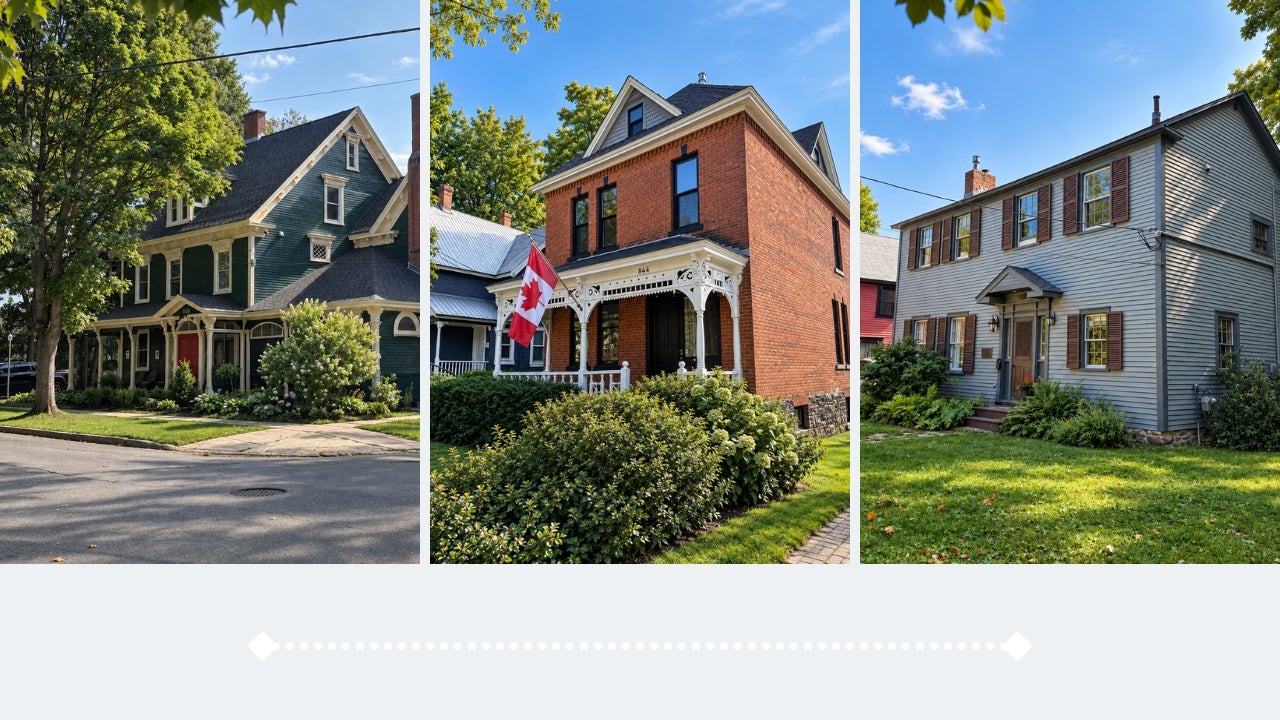
🏛️ George Street Fredericton: The History Behind Some of the City's Oldest Homes
🍁The Rob Brown Realty JournalWednesday | Fredericton History • Streets & Neighbourhoods
George Street is easy to overlook.
It doesn't have Queen Street's storefronts, Waterloo Row's riverfront setting or Brunswick Street's institutional landmarks. Much of it simply looks like a pleasant, established residential street running through Fredericton's Town Plat.
But look at the addresses individually and George Street becomes something else entirely.
One house reportedly contained a courtroom. Another family built a telescope in the backyard. Two neighbouring houses were physically joined together. One resident was caught in Fredericton's surprisingly contentious switch from local time to Standard Time. And another homeowner helped ensure Fredericton remained New Brunswick's capital.
These aren't legends pulled from neighbourhood folklore. They appear in Fredericton's official heritage records.
So let's look behind a few of those doors.
When Captain Dugald Campbell surveyed Fredericton's Town Plat in 1786, George and Charlotte were the only east-west streets surveyed in what is now the South Core, along with short sections of several intersecting streets.
The area south of Charlotte was largely pasture and common land, and the southern portion of the Town Plat developed slowly. City planning research describes this area during the first half of the 19th century as essentially the “back of town.”
That's an interesting description today.
Because some of the buildings that eventually appeared along George Street became associated with judges, premiers, mayors, craftspeople, inventors and some remarkably unusual chapters in Fredericton history.
The Isaac Allen Cottage at 868 George Street dates to approximately 1800 and is considered an example of early British Regime/Loyalist architecture.
Its original occupant, Colonel Isaac Allen, was one of the first judges of His Majesty's Supreme Court.
Here's where the house gets particularly interesting.
According to its official historic-place record, Allen reportedly held court in the parlour of his own house. The unusually high ceiling in that room has been cited as supporting evidence that it served that purpose.
Imagine that in today's terms:
A residential front room on George Street functioning as part of New Brunswick's early judicial system.
The house later became home to Dr. Lillian Beckwith Maxwell, an important Fredericton local historian.
More than two centuries after it was built, the cottage remains part of the streetscape.
759 George Street was built in 1826 by Alward Harned, a skilled mason and carpenter who had been involved in constructing Province Hall, Fredericton's early legislative and court building.
James White, a Queen Street jeweller and watchmaker, bought the house in 1860.
James and his son Harry apparently shared more than a jewellery business.
They built a telescope in their George Street backyard.
According to the City's heritage record, the telescope attracted the attention — and participation — of their neighbours.
Harry White continued inventing.
In 1897, he designed a street-corner receptacle intended to reduce sewer odours. He also devised a mechanism for testing Fredericton's electric fire alarms.
But Harry also became involved in a Fredericton debate that sounds remarkably strange today.
🕰️ What Time Is It, Fredericton?
Harry became caretaker of the City Hall clock.
In 1896, that clock briefly displayed Standard Time rather than Local Time.
The problem?
Many Fredericton residents didn't want Standard Time.
The City reverted, and when Standard Time was finally adopted in 1902, Harry produced a chart explaining the difference between the two systems.
So one of the people responsible for helping Fredericton understand what time it was lived right here on George Street.
758 George Street was constructed beginning in the 1850s for George N. Segee, a local barrister. Segee later acquired the neighbouring lot and built what became 770 George Street, completed by the early 1860s.
Then somebody connected them.
By 1878, a single-storey structure physically linked the two houses.
The combined buildings appear to have operated as one dwelling from the 1870s into the early 1900s. By 1910 they once again had separate addresses, although the connecting structure remained until sometime after the First World War.
Why were they joined?
The City's heritage record says the precise reason isn't clear.
And that's part of what makes old houses interesting.
Sometimes the building survives longer than the explanation for it.
Future New Brunswick premier Andrew G. Blair had the house at 809–811 George Street constructed during the 1870s.
But not all of its timber was new.
According to the City, some of the wood used in its construction was salvaged from the childhood home of poet Bliss Carman after that building was destroyed by fire. Blair had the best surviving timber recovered from the ruins.
Blair later became Premier of New Brunswick from 1883 to 1896.
In 1895 he hired architect R.C. John Dunn to substantially renovate the house and convert it for double occupancy, with the work completed in 1896.
The building's history didn't end as a residence.
During the late 1930s and into 1940 it was used as office space by the International Pulp and Paper Company, and it temporarily housed the Entomological Service while its UNB building was being reconstructed.
Today, it has returned to residential use.
One building. Several completely different lives.
The substantial brick house at 682 George Street was built in 1894 for Patrick George Ryan, a former provincial politician who had represented Gloucester County.
Ryan's connection to Fredericton matters because of what happened after Province Hall burned in 1880.
The destruction of the Legislature triggered a debate over where New Brunswick's replacement legislative building should be constructed.
There was pressure to move the seat of government to Saint John.
Ryan strongly advocated for Fredericton to remain the provincial capital. The City's heritage record describes his influence in keeping the seat of government here as his greatest legacy to Fredericton.
Think about the consequences had that argument gone differently.
The Legislature.
Government offices.
Employment.
Downtown development.
Fredericton's identity as a capital city.
The city we know today could have evolved very differently.
And one of the people involved in that fight later made his home at 682 George Street.
The oldest Church Street portion predates the mid-19th century. Judge George F. Gregory, who served multiple terms as Mayor of Fredericton, owned the property and expanded it after 1878 to include the George Street portion.
Then its function changed.
In 1912, the Christ Church Cathedral Chapter purchased the property for use as the bishop's residence. Bishop John Richardson and his family lived there until his death in 1938, and a one-storey library was added during the 1912 renovations.
Then it changed again.
UNB purchased the property in 1960 and converted it into a residence known as Murray House.
That's one of the recurring themes on George Street.
These weren't museum pieces frozen at the moment they were constructed.
Fredericton kept finding new uses for them.
844 George Street was built in 1902 for confectionery store proprietor George F. Wilkes.
It's an Edwardian-inspired brick house — and the material itself is important.
Most houses being built in that part of Fredericton at the time were wood-frame structures. A substantial brick residence therefore reflected Wilkes's commercial success.
The property was part of land owned by George Edward Fenety, a former Fredericton mayor. When the Fenety Estate began selling building lots around the turn of the 20th century, it helped produce a modest construction boom in this section of George Street.
You can essentially read that period of the city's expansion through the houses that remain.
114 George Street was constructed in 1914 for Washington Storey Hooper, around the end of his second and final term as Mayor of Fredericton.
Unlike the older wood-frame houses farther east, this one was built using pressed concrete block.
Today that might not sound remarkable.
At the time, it was.
Pressed and textured concrete block offered an affordable way to imitate the appearance of stone masonry and became a locally produced building alternative popular between the world wars.
Before becoming mayor, Hooper had been a city councillor. His résumé also included work as an accountant, printer, insurance businessman and manager of the Barker House Hotel.
The previous Hooper family house on the property dated to the 1850s.
It was removed to make way for the “modern” concrete-block house.
Heritage, in other words, sometimes replaced older heritage.
It represents layers of it.
Around 1800: an early judge reportedly holds court in his parlour.
1826: a craftsman builds a house that still stands.
The 1800s: neighbours gather around a homemade backyard telescope.
The 1870s: two separate houses are physically joined.
The 1880s: Fredericton fights to remain New Brunswick's capital.
The 1890s: salvaged timber from Bliss Carman's childhood home finds a second life.
1902: a successful merchant builds in brick while wood still dominates the neighbourhood.
1912: a former mayor's home becomes a bishop's residence.
1914: concrete block represents an economical new building technology.
1960: UNB repurposes an old residence.
And through all of it, people kept adapting the buildings.
That may be the most relevant lesson George Street offers Fredericton today.
George Street demonstrates that those ideas aren't necessarily incompatible.
Several of its historic houses have been enlarged, divided, joined, separated, converted to offices, used institutionally, turned into multiple residences and returned to residential use.
They survived partly because they remained useful.
That's a different way to think about heritage.
Preservation doesn't always mean keeping a building exactly as it existed in 1850.
Sometimes it means finding a way for an 1850 building to still make sense in 2026.
There's a former courtroom.
A backyard where neighbours once looked through a homemade telescope.
Two houses that used to be one.
Timber rescued from a famous poet's childhood home.
A former bishop's residence.
And the home of a politician who helped ensure Fredericton remained the provincial capital.
The remarkable thing isn't simply that Fredericton built these houses.
It's that so many are still here.
💬 Which Fredericton street should we explore behind the doors of next?
Whether you're exploring Fredericton's historic Town Plat, considering an older home or simply curious about the stories hidden behind familiar streets, we'll keep digging into the places that make this city distinctive.
George Street is easy to overlook.
It doesn't have Queen Street's storefronts, Waterloo Row's riverfront setting or Brunswick Street's institutional landmarks. Much of it simply looks like a pleasant, established residential street running through Fredericton's Town Plat.
But look at the addresses individually and George Street becomes something else entirely.
One house reportedly contained a courtroom. Another family built a telescope in the backyard. Two neighbouring houses were physically joined together. One resident was caught in Fredericton's surprisingly contentious switch from local time to Standard Time. And another homeowner helped ensure Fredericton remained New Brunswick's capital.
These aren't legends pulled from neighbourhood folklore. They appear in Fredericton's official heritage records.
So let's look behind a few of those doors.
🗺️ First: George Street Is Older Than It Looks
George Street's history begins before most of the houses now standing along it.When Captain Dugald Campbell surveyed Fredericton's Town Plat in 1786, George and Charlotte were the only east-west streets surveyed in what is now the South Core, along with short sections of several intersecting streets.
The area south of Charlotte was largely pasture and common land, and the southern portion of the Town Plat developed slowly. City planning research describes this area during the first half of the 19th century as essentially the “back of town.”
That's an interesting description today.
Because some of the buildings that eventually appeared along George Street became associated with judges, premiers, mayors, craftspeople, inventors and some remarkably unusual chapters in Fredericton history.
⚖️ 868 George Street: The House With a Courtroom
Start near University Avenue with one of George Street's oldest survivors.The Isaac Allen Cottage at 868 George Street dates to approximately 1800 and is considered an example of early British Regime/Loyalist architecture.
Its original occupant, Colonel Isaac Allen, was one of the first judges of His Majesty's Supreme Court.
Here's where the house gets particularly interesting.
According to its official historic-place record, Allen reportedly held court in the parlour of his own house. The unusually high ceiling in that room has been cited as supporting evidence that it served that purpose.
Imagine that in today's terms:
A residential front room on George Street functioning as part of New Brunswick's early judicial system.
The house later became home to Dr. Lillian Beckwith Maxwell, an important Fredericton local historian.
More than two centuries after it was built, the cottage remains part of the streetscape.
🔭 759 George Street: The Telescope in the Backyard
This house gives us a much more personal glimpse of 19th-century Fredericton.759 George Street was built in 1826 by Alward Harned, a skilled mason and carpenter who had been involved in constructing Province Hall, Fredericton's early legislative and court building.
James White, a Queen Street jeweller and watchmaker, bought the house in 1860.
James and his son Harry apparently shared more than a jewellery business.
They built a telescope in their George Street backyard.
According to the City's heritage record, the telescope attracted the attention — and participation — of their neighbours.
Harry White continued inventing.
In 1897, he designed a street-corner receptacle intended to reduce sewer odours. He also devised a mechanism for testing Fredericton's electric fire alarms.
But Harry also became involved in a Fredericton debate that sounds remarkably strange today.
🕰️ What Time Is It, Fredericton?
Harry became caretaker of the City Hall clock.
In 1896, that clock briefly displayed Standard Time rather than Local Time.
The problem?
Many Fredericton residents didn't want Standard Time.
The City reverted, and when Standard Time was finally adopted in 1902, Harry produced a chart explaining the difference between the two systems.
So one of the people responsible for helping Fredericton understand what time it was lived right here on George Street.
🏠 758 & 770 George Street: Two Houses Became One
This may be one of the strangest architectural stories on the street.758 George Street was constructed beginning in the 1850s for George N. Segee, a local barrister. Segee later acquired the neighbouring lot and built what became 770 George Street, completed by the early 1860s.
Then somebody connected them.
By 1878, a single-storey structure physically linked the two houses.
The combined buildings appear to have operated as one dwelling from the 1870s into the early 1900s. By 1910 they once again had separate addresses, although the connecting structure remained until sometime after the First World War.
Why were they joined?
The City's heritage record says the precise reason isn't clear.
And that's part of what makes old houses interesting.
Sometimes the building survives longer than the explanation for it.
🪵 809–811 George Street: A House Built Partly From Another House
A few doors away is another architectural recycling story.Future New Brunswick premier Andrew G. Blair had the house at 809–811 George Street constructed during the 1870s.
But not all of its timber was new.
According to the City, some of the wood used in its construction was salvaged from the childhood home of poet Bliss Carman after that building was destroyed by fire. Blair had the best surviving timber recovered from the ruins.
Blair later became Premier of New Brunswick from 1883 to 1896.
In 1895 he hired architect R.C. John Dunn to substantially renovate the house and convert it for double occupancy, with the work completed in 1896.
The building's history didn't end as a residence.
During the late 1930s and into 1940 it was used as office space by the International Pulp and Paper Company, and it temporarily housed the Entomological Service while its UNB building was being reconstructed.
Today, it has returned to residential use.
One building. Several completely different lives.
🏛️ 682 George Street: The Man Who Helped Keep the Capital Here
This is a story with much bigger implications.The substantial brick house at 682 George Street was built in 1894 for Patrick George Ryan, a former provincial politician who had represented Gloucester County.
Ryan's connection to Fredericton matters because of what happened after Province Hall burned in 1880.
The destruction of the Legislature triggered a debate over where New Brunswick's replacement legislative building should be constructed.
There was pressure to move the seat of government to Saint John.
Ryan strongly advocated for Fredericton to remain the provincial capital. The City's heritage record describes his influence in keeping the seat of government here as his greatest legacy to Fredericton.
Think about the consequences had that argument gone differently.
The Legislature.
Government offices.
Employment.
Downtown development.
Fredericton's identity as a capital city.
The city we know today could have evolved very differently.
And one of the people involved in that fight later made his home at 682 George Street.
⛪ 806 George Street: Mayor's Home, Bishop's Residence, UNB Residence
At George and Church Streets stands a building that is really several buildings combined into one.The oldest Church Street portion predates the mid-19th century. Judge George F. Gregory, who served multiple terms as Mayor of Fredericton, owned the property and expanded it after 1878 to include the George Street portion.
Then its function changed.
In 1912, the Christ Church Cathedral Chapter purchased the property for use as the bishop's residence. Bishop John Richardson and his family lived there until his death in 1938, and a one-storey library was added during the 1912 renovations.
Then it changed again.
UNB purchased the property in 1960 and converted it into a residence known as Murray House.
That's one of the recurring themes on George Street.
These weren't museum pieces frozen at the moment they were constructed.
Fredericton kept finding new uses for them.
🍬 844 George Street: When Brick Made a Statement
Not every historically interesting house belonged to a politician or judge.844 George Street was built in 1902 for confectionery store proprietor George F. Wilkes.
It's an Edwardian-inspired brick house — and the material itself is important.
Most houses being built in that part of Fredericton at the time were wood-frame structures. A substantial brick residence therefore reflected Wilkes's commercial success.
The property was part of land owned by George Edward Fenety, a former Fredericton mayor. When the Fenety Estate began selling building lots around the turn of the 20th century, it helped produce a modest construction boom in this section of George Street.
You can essentially read that period of the city's expansion through the houses that remain.
🧱 114 George Street: Concrete Was Once the New Thing
Jump forward another decade and George Street provides an interesting reminder about architectural fashion.114 George Street was constructed in 1914 for Washington Storey Hooper, around the end of his second and final term as Mayor of Fredericton.
Unlike the older wood-frame houses farther east, this one was built using pressed concrete block.
Today that might not sound remarkable.
At the time, it was.
Pressed and textured concrete block offered an affordable way to imitate the appearance of stone masonry and became a locally produced building alternative popular between the world wars.
Before becoming mayor, Hooper had been a city councillor. His résumé also included work as an accountant, printer, insurance businessman and manager of the Barker House Hotel.
The previous Hooper family house on the property dated to the 1850s.
It was removed to make way for the “modern” concrete-block house.
Heritage, in other words, sometimes replaced older heritage.
🔎 What George Street Actually Shows Us
George Street is interesting because it doesn't represent one period of Fredericton history.It represents layers of it.
Around 1800: an early judge reportedly holds court in his parlour.
1826: a craftsman builds a house that still stands.
The 1800s: neighbours gather around a homemade backyard telescope.
The 1870s: two separate houses are physically joined.
The 1880s: Fredericton fights to remain New Brunswick's capital.
The 1890s: salvaged timber from Bliss Carman's childhood home finds a second life.
1902: a successful merchant builds in brick while wood still dominates the neighbourhood.
1912: a former mayor's home becomes a bishop's residence.
1914: concrete block represents an economical new building technology.
1960: UNB repurposes an old residence.
And through all of it, people kept adapting the buildings.
That may be the most relevant lesson George Street offers Fredericton today.
🏡 Preservation Doesn't Have to Mean Freezing a Neighbourhood in Time
Fredericton is currently having an important conversation about growth, density and preserving neighbourhood character.George Street demonstrates that those ideas aren't necessarily incompatible.
Several of its historic houses have been enlarged, divided, joined, separated, converted to offices, used institutionally, turned into multiple residences and returned to residential use.
They survived partly because they remained useful.
That's a different way to think about heritage.
Preservation doesn't always mean keeping a building exactly as it existed in 1850.
Sometimes it means finding a way for an 1850 building to still make sense in 2026.
❤️ The Fredericton Conversation
Next time you're walking George Street, look past the façades.There's a former courtroom.
A backyard where neighbours once looked through a homemade telescope.
Two houses that used to be one.
Timber rescued from a famous poet's childhood home.
A former bishop's residence.
And the home of a politician who helped ensure Fredericton remained the provincial capital.
The remarkable thing isn't simply that Fredericton built these houses.
It's that so many are still here.
💬 Which Fredericton street should we explore behind the doors of next?
🌿 See Fredericton Differently
A city's neighbourhoods make considerably more sense when you understand how they developed.Whether you're exploring Fredericton's historic Town Plat, considering an older home or simply curious about the stories hidden behind familiar streets, we'll keep digging into the places that make this city distinctive.