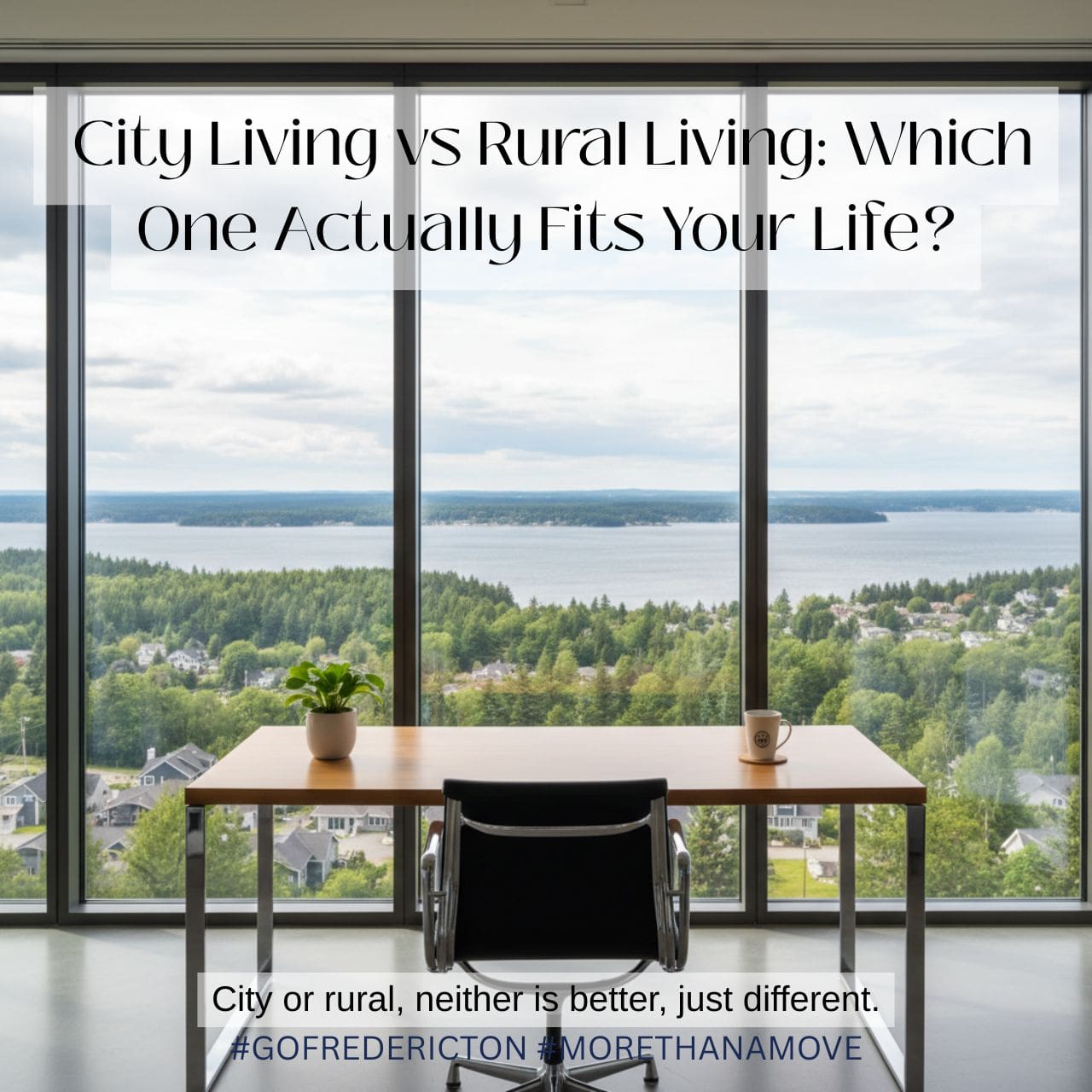
City Living vs Rural Living: Which One Actually Fits Your Life?
This question comes up all the time:
Should we stay in the city… or go rural?
It often comes up quietly, somewhere between scrolling listings late at night and imagining a different version of daily life. More space. Less noise. Shorter commutes. More quiet. More convenience. Sometimes all of it, even though some of those things pull in opposite directions.
And the honest answer is this: neither option is better. They’re just different.
What matters most isn’t where a home is located on a map, it’s how well it supports the life you’re actually living right now.
What City Living Often Looks Like in Fredericton
City living in Fredericton is about proximity and convenience.
Shorter commutes. Quicker trips to school, work, groceries, and activities. Municipal water and sewer. Sidewalks. Streetlights. Snow removal handled by the city. Easier access to events, restaurants, trails, and community spaces.
For many people, this kind of convenience is invaluable, especially families juggling busy schedules, people who don’t want to drive long distances, or anyone who prefers walkable neighbourhoods and established infrastructure.
City homes also tend to come in certain styles more often: split entries, two-storey homes, bungalows on smaller lots, and older character homes in mature neighbourhoods. These styles often trade large land for location and ease of access.
City living can feel connected, efficient, and predictable, which for some people brings a lot of peace of mind.
What Rural Living Really Means in New Brunswick
Rural living offers something entirely different.
More space. More privacy. Fewer neighbours. Room for gardens, workshops, hobbies, and quiet. Many people are drawn to the idea of stepping outside and hearing less traffic and more nature.
But rural living also comes with responsibilities that aren’t always obvious at first.
Longer drives are common, to work, school, groceries, and services. Homes are more likely to rely on wells and septic systems instead of municipal services. Snow removal is often your responsibility. Internet access can vary by area. Maintenance can be more hands-on.
Rural homes also tend to include different styles: bungalows, side splits, older farmhouses, mini homes on owned land, and properties with multiple outbuildings. These homes can be incredibly appealing, but they often require buyers to be comfortable with a bit more involvement.
None of this is bad. It’s just different.
Lifestyle Matters More Than Price or Square Footage
One of the biggest mistakes people make when choosing between city and rural living is focusing only on price or lot size.
A larger property at a lower price can look appealing, until the reality of longer drives, maintenance, and winter conditions sets in. On the other hand, a smaller city lot can feel limiting, until you realize how much time and energy it saves you every week.
That’s why we encourage people to think about rhythm, not just features.
How do your days actually unfold?
How do you feel about driving in winter?
Do you enjoy maintenance, or does it feel like a burden?
Do you want neighbours nearby, or distance between you and the next home?
The right choice is the one that supports your real life, not the version you imagine on a perfect day.
Home Style Plays a Bigger Role Than People Expect
Where you live and how your home is designed are closely connected.
A bungalow in the city might offer convenience and accessibility with minimal upkeep. A split entry just outside the city might offer more space but more stairs. A rural farmhouse might offer charm and land, but also require more hands-on care.
Understanding home styles helps clarify the decision between city and rural living. Layout, stairs, heating, and maintenance all affect daily life, especially in New Brunswick’s climate.
Sometimes people don’t need to move rural to get what they want. Sometimes they don’t need to stay in the city to feel connected. Exploring both options thoughtfully often brings clarity.
There’s No Wrong Choice, Only the Right One for Right Now
People are happiest when their home supports their real life, not the life they think they should want.
City living and rural living both offer meaningful benefits. The key is understanding the trade-offs and choosing intentionally.
And it’s worth remembering: this choice doesn’t have to be forever. Needs change. Life evolves. Homes can too.
There’s no wrong choice here.
There’s only the choice that fits you best, right now.